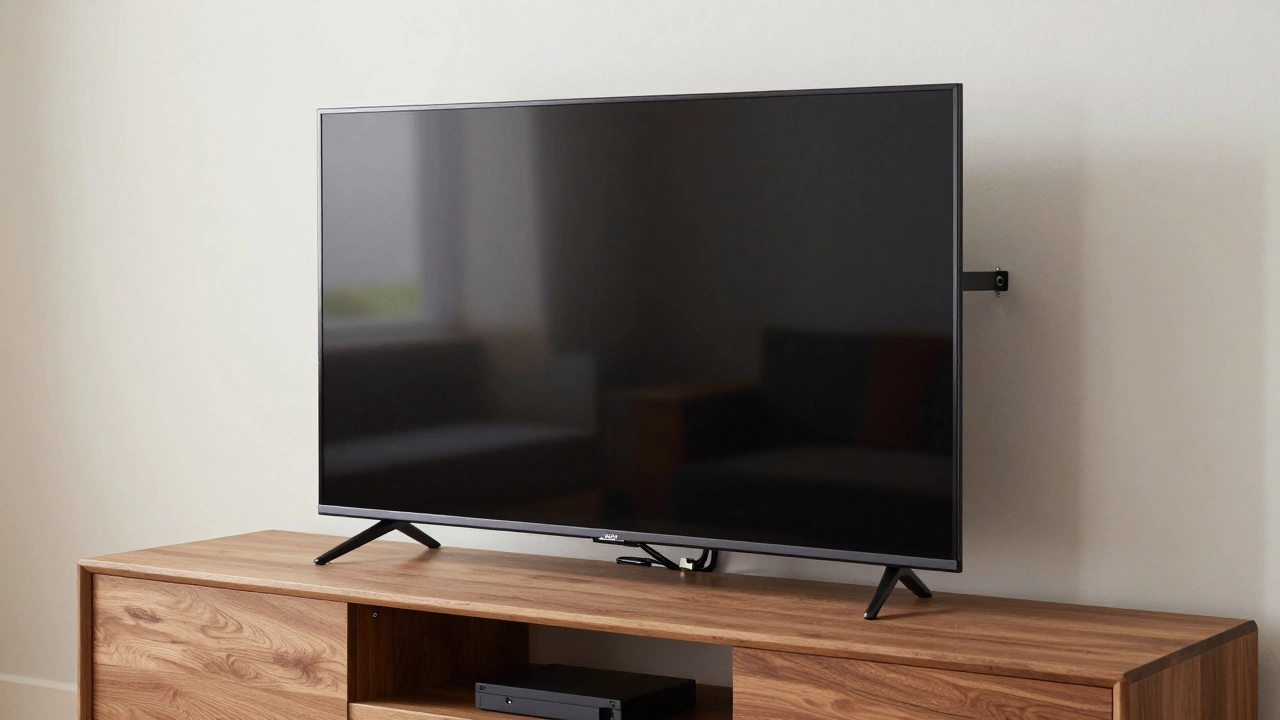
Ever bought a new flat screen TV and wondered if it’ll actually sit safely on that sleek stand you just picked up? You’re not alone. Many people assume if a TV stand looks sturdy and fits the size, it’s good to go. But that’s not always true. Putting a flat screen TV on a stand isn’t just about looks-it’s about physics, weight, and proper fit. Get it wrong, and you risk a costly, dangerous fall.
Not All TV Stands Are Created Equal
TV stands come in all shapes and sizes, but they’re not universal. A stand designed for a 32-inch TV won’t handle a 75-inch model, even if it seems like it should fit. The key is matching the stand’s weight capacity and VESA compatibility to your TV’s specs. Most flat screen TVs have a VESA mount pattern on the back-the holes where you’d attach a wall bracket or stand. These patterns vary: 100x100mm, 200x200mm, 400x400mm, and up. If your TV’s VESA pattern doesn’t match the stand’s mounting holes, it won’t attach securely. No adapter will fix a mismatched VESA size safely. Always check the TV’s manual or the manufacturer’s website for the exact VESA dimensions before buying a stand.Weight Matters More Than You Think
A 55-inch OLED TV might look light, but it can weigh 40 pounds or more. Add a soundbar or cable box on top, and you’re pushing 50 pounds. Most budget TV stands list a max weight of 50-70 pounds. Sounds fine, right? But here’s the catch: manufacturers test those numbers under ideal conditions. Real-world use involves bumps, pets, kids, and accidental leans. Look for stands rated for at least 20% more than your TV’s actual weight. If your TV is 45 pounds, aim for a stand rated 55 pounds or higher. That extra buffer gives you safety room for accessories and unexpected forces.Stability Is Everything
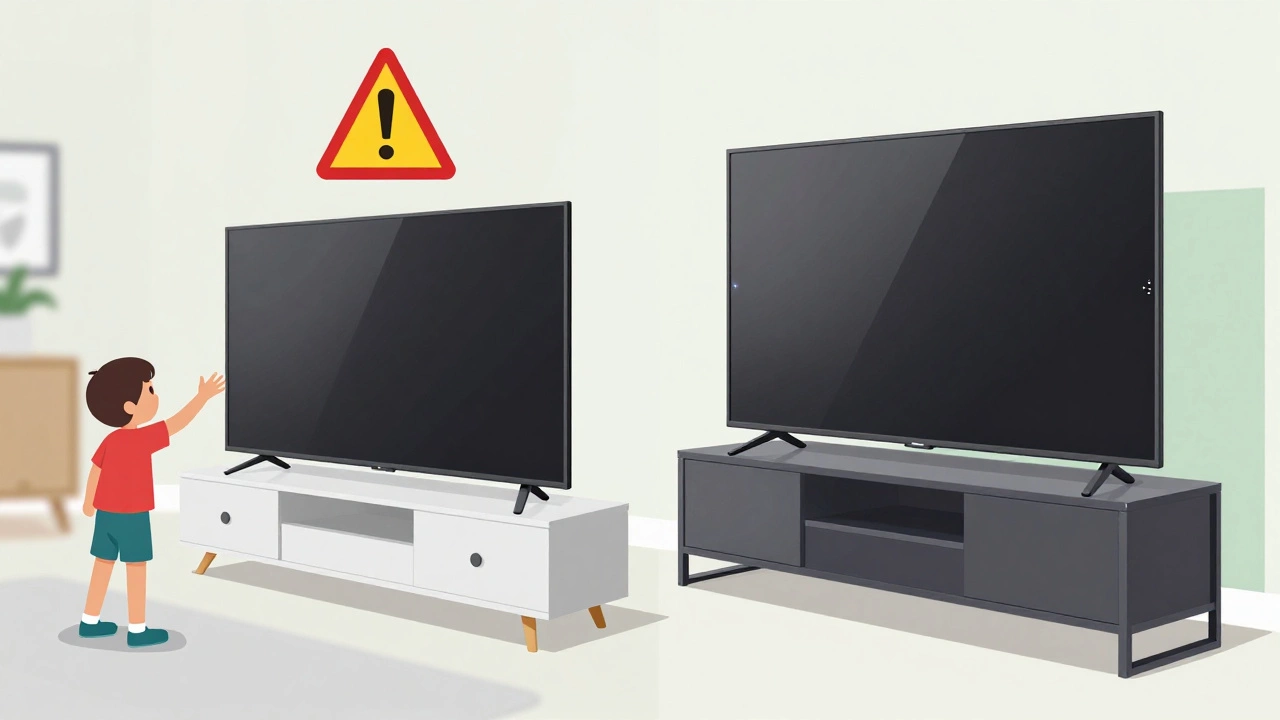
A TV stand that wobbles when you walk past is a hazard waiting to happen. The best stands have wide, heavy bases that lower the center of gravity. Look for stands with:- Wide footprints (at least 2/3 the width of your TV)
- Non-slip pads on the bottom
- Adjustable feet for uneven floors
- Anchor points to secure the TV to the wall (especially in homes with kids or pets)
What About Cable Management?
Cables dangling behind your TV don’t just look messy-they add strain. If your TV is pulled forward by a heavy power cord or HDMI cable, it can shift or tip. Good stands include built-in cable management: hidden channels, clips, or holes to route wires neatly to the back. Don’t just tuck cables behind the stand. Use Velcro straps or adhesive clips to keep them organized and taut. A loose cable hanging down can be a trip hazard-and if someone yanks it, your TV might follow.Check Before You Buy: A Simple Checklist
Before you take your TV home or unbox that new stand, run through this quick checklist:- Find your TV’s exact weight (check the manual or manufacturer’s site)
- Locate the VESA pattern (usually a 4-hole square on the back)
- Compare it to the stand’s listed VESA range and weight limit
- Measure the stand’s width-should be at least 70% of your TV’s width
- Look for anti-slip pads and wall anchor options
- Read real user reviews for reports of tipping or instability
When a Stand Isn’t Enough
Some TVs are just too big or too heavy for any standard stand. If your TV is over 75 inches or weighs more than 100 pounds, consider a floor-standing media console instead of a simple stand. These are built like furniture, with reinforced frames and steel supports. Brands like Sauder, Ameriwood, and Elements offer models rated for 150+ pounds. Or, if you have the space, wall-mounting is the safest option. It removes tipping risk entirely and gives you better viewing angles. You can still use a media console below for your game console or streaming box.Real-World Example: What Went Wrong
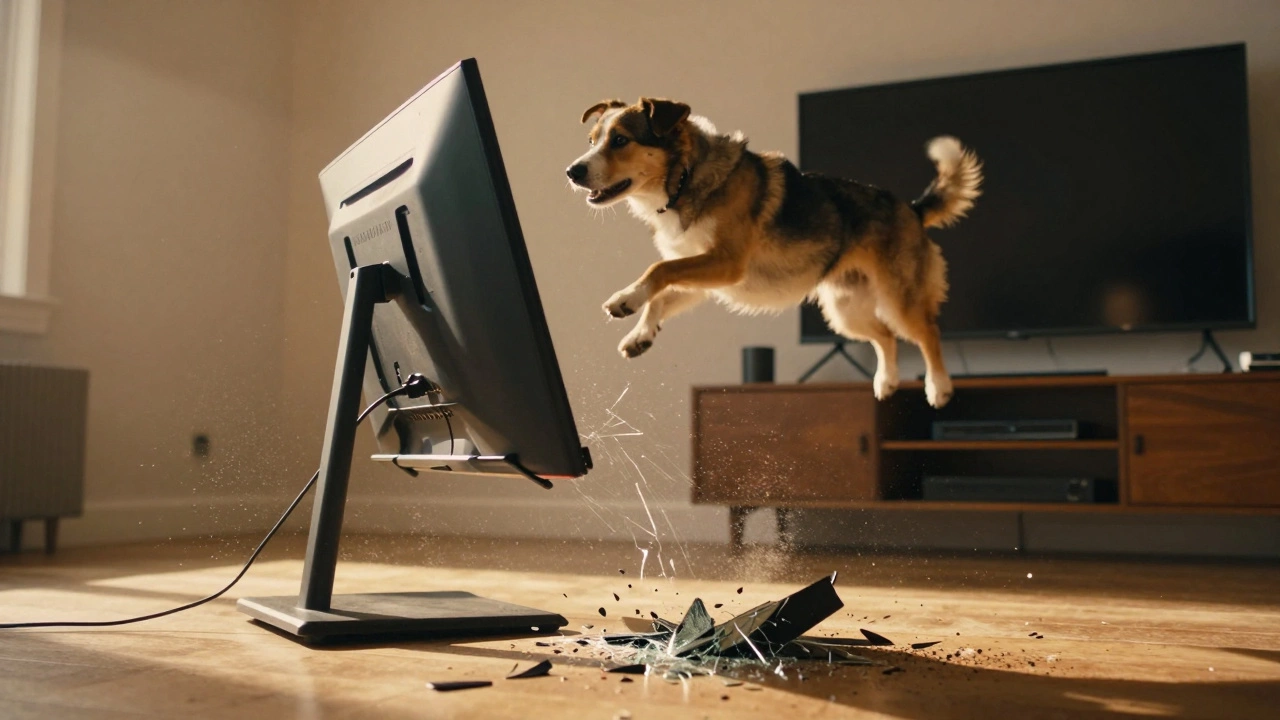
A family in Ohio bought a 65-inch LG TV and a trendy, minimalist stand from a popular online retailer. The stand claimed to hold up to 80 pounds-the TV weighed 52. It seemed perfect. But the stand had a narrow base, no anti-slip pads, and no wall anchor points. One day, the dog jumped up and knocked the side of the stand. The TV tilted, slid forward, and crashed to the floor. The screen was ruined. The stand was useless. The dog was fine. This isn’t rare. Emergency rooms see dozens of TV-related injuries every year. Most are preventable.Bottom Line
Yes, you can put a flat screen TV on a stand-but only if the stand is designed for it. Don’t guess. Don’t assume. Check the specs. Match the VESA. Verify the weight. Prioritize stability over style. A good stand might cost $50 more than a cheap one, but it’s cheaper than replacing a TV, fixing a cracked tile, or paying for a hospital visit. Your TV is one of the most expensive items in your living room. Treat it like it matters.Can any flat screen TV go on any stand?
No. TV stands have specific weight limits and VESA mount patterns. If your TV’s weight exceeds the stand’s rating or its back mounting holes don’t match the stand’s holes, it won’t be safe to use. Always check your TV’s manual for exact specs before buying a stand.
What happens if I put a TV on a stand that’s too small?
If the stand is too narrow or the base is too small, the TV can become unstable and tip over. Even if the weight limit isn’t exceeded, poor balance makes it easy for a bump, pet, or child to knock it down. This can damage the TV, the stand, and anything nearby-and poses a serious injury risk.
Is it safe to put a TV on a stand without wall anchoring?
It’s possible, but not ideal, especially in homes with children, pets, or high traffic. Wall anchoring adds a critical safety layer. Many TV stands include anchor kits-use them. A simple strap connected from the stand to a wall stud can prevent a fall even if the TV is knocked.
Do TV stands come with mounting hardware?
Most quality TV stands include screws and brackets for VESA mounting. But not all do-especially budget or generic models. Always check the product listing or box contents before assuming. If hardware isn’t included, you’ll need to buy it separately. Make sure the screws match your TV’s hole depth and thread size.
Can I use a TV stand for an older CRT TV?
Not safely. CRT TVs are much heavier and have different mounting designs than flat screens. They often use a single central post or a wide, curved base. Modern TV stands are built for flat, VESA-mounted screens. For a CRT, use a stand or cabinet designed specifically for older TVs.
How do I know if my TV stand is too tall?
Your TV’s center should be at eye level when you’re seated. For most people, that’s about 42 inches off the floor. If your stand makes the TV’s center higher than 48 inches, it’s too tall. A tall stand raises the center of gravity, making the TV more likely to tip. For large TVs, choose a low-profile stand that keeps the screen close to the floor.