Outdoor Furniture Material Finder
Select your priorities below to find the most suitable material for your garden. Weighing up cost against longevity is key in wet climates.
Quick Comparison Guide
| Material | Rain Resistance | Maintenance | Lifespan (UK) | Cost |
|---|---|---|---|---|
| Solid Teak | Excellent | Low | 20-50 Years | ££££ |
| Powder-Coated Aluminum | Excellent | Very Low | 15-25 Years | ££ |
| HDPE Wicker | Good | Low | 10-15 Years | ££ |
| Acacia Wood | Moderate | Medium | 5-10 Years | £ |
| Steel (Powder-Coated) | Fair | High | 5-10 Years | £ |
Living in a place like Leeds means accepting one truth: the rain is coming. It doesn’t matter if you check the forecast or keep your eyes on the sky; eventually, that grey blanket rolls over and soaks everything in sight. If you’ve just bought a shiny new set of patio chairs only to watch them rust, warp, or grow mould within two seasons, you’re not alone. Most people buy outdoor furniture based on how it looks in the showroom, not how it survives a British winter. But here’s the thing: the material you choose dictates whether your garden oasis lasts five years or fifteen.
You don’t need to spend a fortune to get furniture that laughs at drizzle, but you do need to know what works. Some materials are naturally hydrophobic, others need sealing, and some-let’s be honest-are basically disposable once they get wet. Let’s break down exactly which outdoor furniture materials stand up best to constant moisture, and why.
The Real Problem with Moisture
Water isn’t just water when it hits your furniture. It’s a delivery system for damage. For metal, it’s oxidation (rust). For wood, it’s swelling, cracking, and fungal growth. For fabric, it’s mildew and staining. The goal isn’t to find something waterproof-nothing really is-but to find materials that either repel water entirely or handle absorption without structural failure.
In the UK context, we’re dealing with high humidity, frequent freeze-thaw cycles, and acidic rain. A chair that survives a dry summer in Spain might crumble here. So, let’s look at the contenders.
Teak: The Gold Standard (With Caveats)
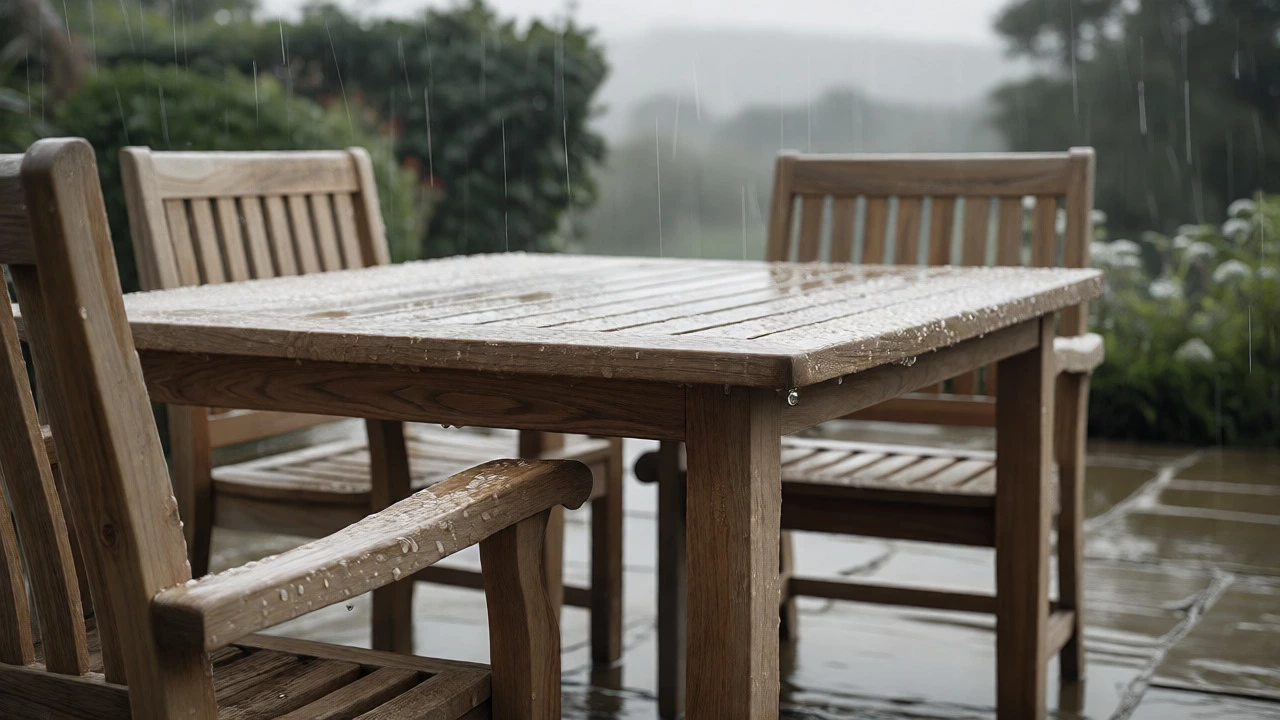
Teak is a tropical hardwood known for its high natural oil content and tight grain structure, making it exceptionally resistant to rot, decay, and insect attack. It’s often called the king of outdoor woods, and for good reason. Unlike pine or oak, teak contains natural silica and oils that act as built-in preservatives. You can leave a solid teak table outside for decades, and while it will fade from golden brown to silvery-grey, it won’t rot.
However, there’s a catch. Not all teak is created equal. Grade A teak has a uniform colour and minimal knots, meaning fewer weak points where water can seep in. Grade B or C might have sapwood edges or cracks that trap moisture. Also, price is a barrier. Solid teak sets start around £800 for a small bistro set and can easily hit £3,000+ for a full dining arrangement. If you buy cheap "teak," you’re likely getting plantation-grown, fast-harvested wood that lacks the density of old-growth timber. Check the weight-heavier is better.
Aluminum: The Low-Maintenance Hero
If you hate maintenance, go with aluminum. Specifically, Powder-Coated Aluminum is a lightweight metal frame treated with an electrostatically applied polymer coating that is cured under heat to form a hard, durable finish resistant to chipping, scratching, and fading. Unlike steel, aluminum doesn’t contain iron, so it literally cannot rust. Instead, it oxidizes slowly, forming a protective layer that actually helps prevent further corrosion.
The powder coat is key here. Raw aluminum is soft and can pit. Powder coating seals it completely. In rainy climates, this is ideal because there’s no porous surface for mould to grip. The downside? Cheap aluminum bends easily. Look for frames with thick gauge tubing (1.5mm or thicker) and reinforced joints. Also, avoid any hardware (screws, bolts) that isn’t stainless steel or coated aluminum, otherwise, those little connection points become rusty eyesores within months.
| Material | Rain Resistance | Maintenance Level | Lifespan (UK Climate) | Cost Range |
|---|---|---|---|---|
| Solid Teak | Excellent (Natural Oils) | Low (Optional Oil) | 20-50 Years | ££££ |
| Powder-Coated Aluminum | Excellent (Non-Porous) | Very Low (Wipe Down) | 15-25 Years | ££ |
| HDPE Wicker | Good (Waterproof Plastic) | Low (Clean Mould) | 10-15 Years | ££ |
| Acacia Wood | Moderate (Needs Sealing) | Medium (Annual Seal) | 5-10 Years | £ |
| Steel (Powder-Coated) | Fair (Chips = Rust) | High (Touch-ups) | 5-10 Years | £ |
HDPE Wicker: The Modern Synthetic
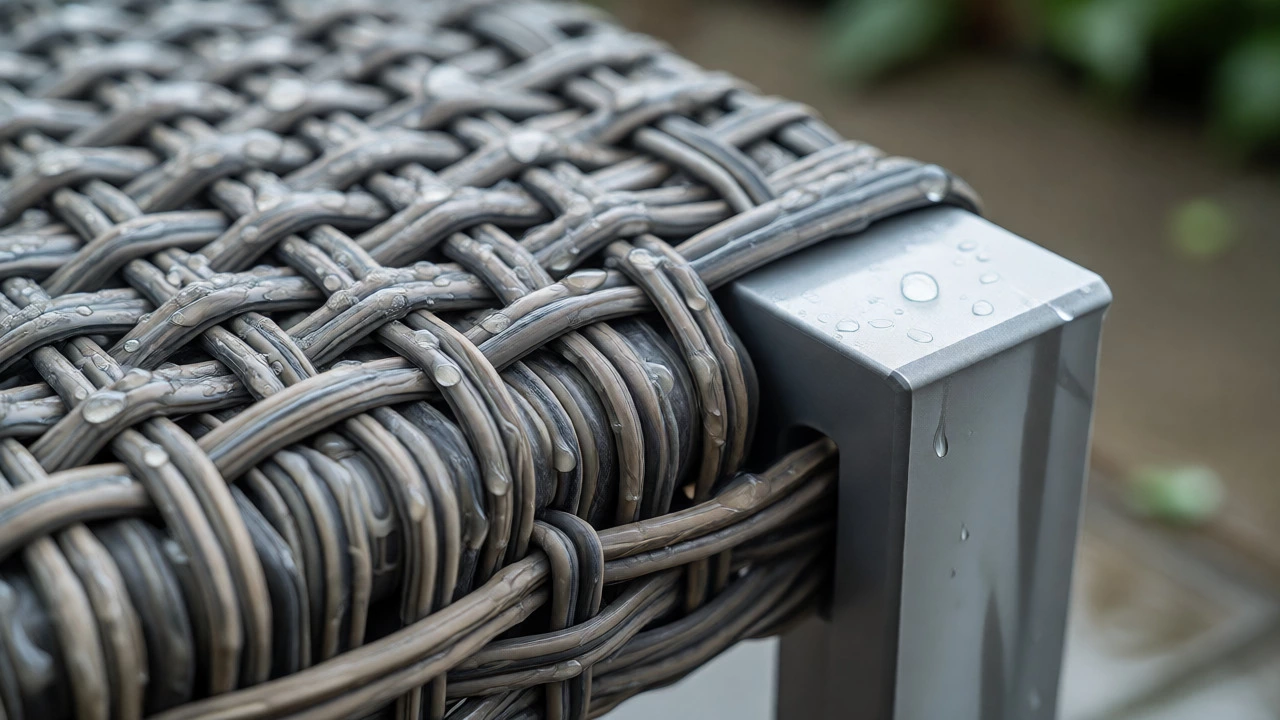
Remember rattan? That brittle, natural vine that snapped after one wet weekend? We’ve moved on. Today’s "wicker" is usually HDPE (High-Density Polyethylene), a synthetic resin woven into a wicker pattern, offering the aesthetic of natural fibres with superior weather resistance and UV stability. HDPE is plastic, yes, but high-quality versions mimic the texture and depth of real cane surprisingly well.
Why does it work in rain? Because it’s non-absorbent. Water sits on the surface and evaporates or runs off. It doesn’t swell, crack, or invite termites. However, the weave traps dirt and organic matter. In damp conditions, algae and mould love to grow in those crevices. You’ll need to hose it down regularly and scrub with soapy water. Avoid PVC wicker-it becomes brittle in cold weather and cracks, letting water reach the internal frame. Stick to HDPE, and ensure the inner frame is also aluminum, not steel.
Hardwoods Like Acacia and Eucalyptus
These are the budget-friendly alternatives to teak. Acacia is a dense, durable hardwood often used in affordable outdoor furniture, known for its rich colour and strength but requiring regular sealing to prevent weathering. It’s heavy, sturdy, and looks great initially. But unlike teak, acacia lacks significant natural oils. Without protection, rain penetrates the grain, causing it to turn grey, split, and eventually soften.
If you choose acacia, commit to maintenance. Apply a quality penetrating oil sealant every spring before the rainy season kicks in. Skip this step, and you’ll have splinters by year three. Eucalyptus is similar-dense and strong, but prone to checking (small cracks) if it dries out too quickly between rain showers. These woods are fine for covered patios but risky for fully exposed lawns unless you’re diligent with upkeep.
What About Steel?
Cast iron and wrought iron look timeless, but they’re problematic in wet climates. Even with powder coating, scratches happen. Move a chair across a rough patio stone, scrape the paint, and expose bare metal to oxygen and water. Boom-rust. Once rust starts, it spreads under the coating, bubbling it up until flakes fall off. If you love the industrial look, choose galvanized steel or marine-grade stainless steel, but expect to pay more. Standard black-painted steel? Keep it under cover.
The Fabric Factor
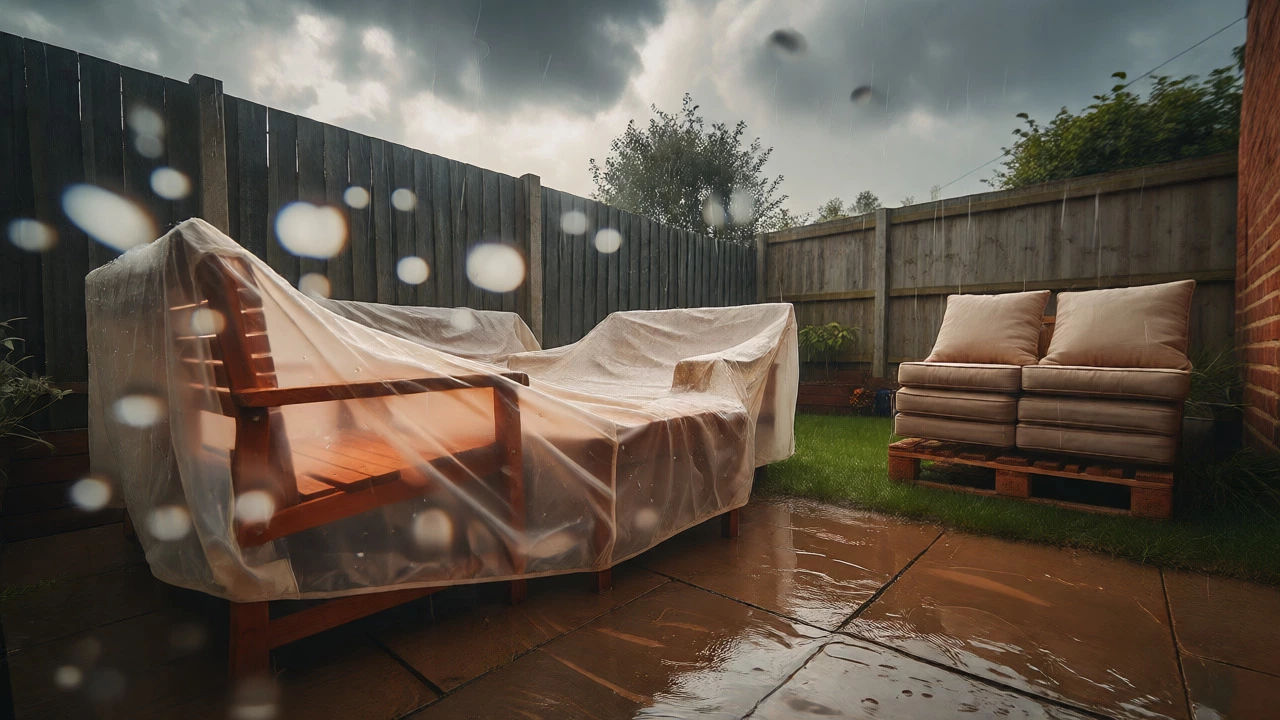
Your frame might survive, but what about the cushions? This is where most outdoor setups fail. Avoid cotton, polyester, or nylon. They absorb water, stay damp, and smell like wet dog within hours. Instead, look for Sunbrella or similar solution-dyed acrylic fabrics engineered for outdoor use, featuring quick-drying properties, UV resistance, and mould/mildew inhibitors. Solution-dyeing means the pigment is mixed into the fibre before spinning, so colours don’t fade, and the fibre itself resists moisture.
Even with Sunbrella, store cushions indoors during prolonged rain. Foam cores take forever to dry and can develop internal mould if left soggy. Use breathable storage bags if you must leave them out, but ideally, bring them in.
Practical Tips for Rainy Regions
- Elevate Your Furniture: Never let wooden legs sit directly on grass or mud. Use foot pads or raise the pieces slightly to allow airflow underneath. Trapped moisture accelerates rot.
- Cover Smartly: Invest in fitted covers made from breathable polyester. Cheap vinyl covers trap condensation, creating a greenhouse effect that breeds mould. Breathable covers let vapour escape while keeping rain out.
- Drainage Matters: Choose designs with slatted tops or mesh bottoms. Solid surfaces hold puddles. Standing water is the enemy of wood and metal alike.
- Check Hardware: Inspect screws and bolts annually. Replace corroded ones immediately. One rusty screw can ruin a whole joint.
Which Should You Buy?
If you have the budget and want zero hassle, buy solid Grade A teak. It ages beautifully and requires almost nothing. If you want value and low effort, go with powder-coated aluminum frames with HDPE wicker accents. It’s modern, clean, and tough. If you’re on a tight budget, acacia works, but only if you promise to seal it every year. Avoid untreated pine, standard steel, and natural rattan-they’re money pits in the rain.
Ultimately, the "best" material depends on your willingness to maintain. Do you want to spend money upfront and forget about it (Teak/Aluminum), or spend less now and work later (Acacia)? Be honest with yourself. Buying cheap furniture you replace every two years costs more than buying quality once.
Does teak furniture need to be oiled?
No, not strictly. Teak contains natural oils that protect it. Oiling maintains the original honey-brown colour, but if you skip it, the wood will naturally weather to a silvery-grey patina. Both states are structurally sound and weather-resistant. Oiling is purely aesthetic.
Is aluminum better than steel for outdoor furniture?
Generally, yes, especially in rainy climates. Aluminum does not rust because it lacks iron. Steel can rust if the protective coating chips. Aluminum is also lighter and easier to move. However, steel is stronger and heavier, which can be good in windy areas, provided the coating remains intact.
Can I leave outdoor cushions out in the rain?
Brief exposure is fine for high-quality solution-dyed acrylics like Sunbrella, as they dry quickly. However, prolonged rain or overnight soaking should be avoided. Waterlogged foam takes days to dry and can develop mould inside. Always store cushions indoors or in a dry box during extended wet spells.
How do I stop mould on HDPE wicker?
Mould grows on organic debris trapped in the weave, not the plastic itself. Regularly hose down the furniture to remove dirt and leaves. For existing mould, scrub with a mixture of warm water and mild dish soap or a vinegar solution. Ensure the furniture dries completely afterwards.
Is rattan suitable for outdoor use?
Natural rattan is not suitable for outdoors. It absorbs water, swells, and rots. Only synthetic rattan (HDPE or PVC) should be used outside. HDPE is preferred over PVC because it is more flexible in cold temperatures and less likely to crack.