POLYWOOD Cost Comparison Calculator
Results
Ever walked past a POLYWOOD patio set and thought, ‘Wait, this costs more than my car?’ You’re not alone. At first glance, POLYWOOD looks like just another plastic lawn chair. But the price? It’s enough to make you double-check the tag. So why does a simple bench or chair from POLYWOOD run $500, $800, even $1,500? It’s not just branding. It’s not hype. There’s real science, real materials, and real engineering behind why POLYWOOD costs what it does-and why it lasts longer than your old wooden patio set ever did.
It’s Made from Recycled Plastic, Not Cheap Plastic
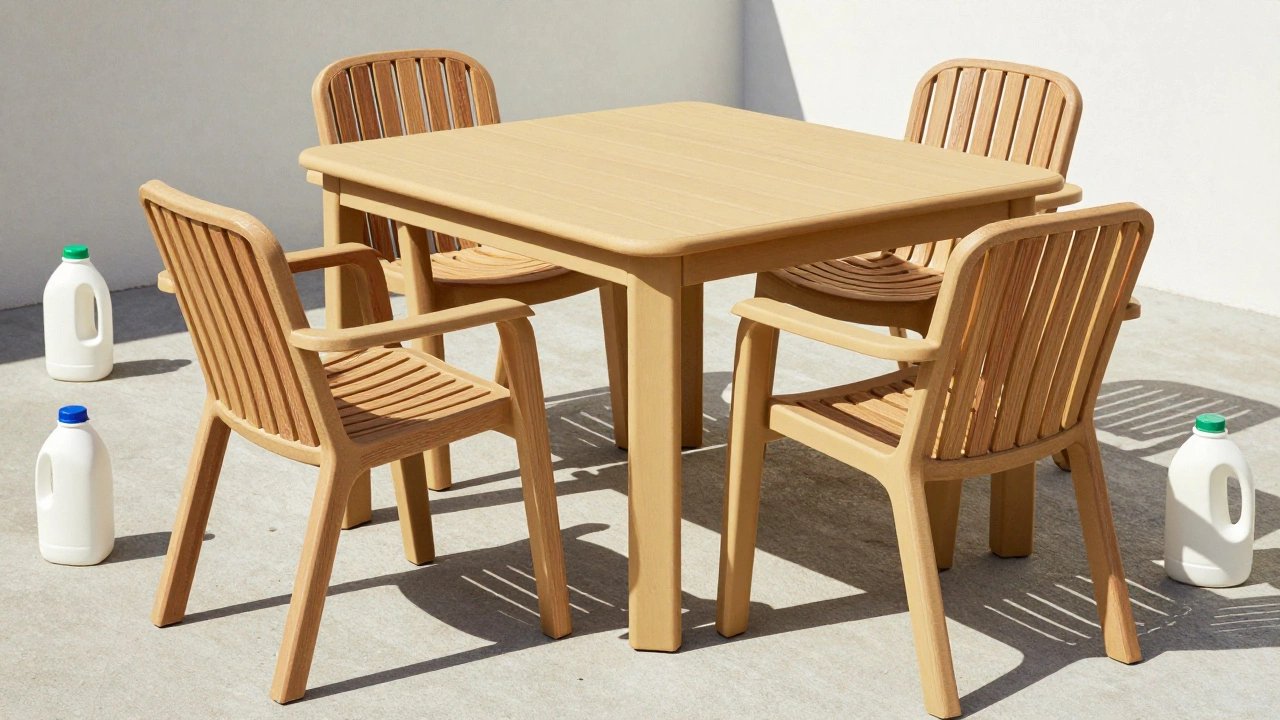
POLYWOOD doesn’t use the same plastic you find in discount store patio sets. That stuff? It’s LDPE or HDPE from virgin sources, thin, brittle, and prone to cracking in winter. POLYWOOD uses high-density polyethylene (HDPE) recovered from milk jugs, detergent bottles, and other post-consumer waste. Each piece of POLYWOOD furniture contains the equivalent of 400 to 600 recycled plastic containers. That’s not a marketing gimmick-it’s a measurable input. The company partners with recycling centers across the U.S. to collect, sort, and clean this material. The process alone-washing, grinding, drying, and testing for contaminants-adds hundreds of dollars per ton to the raw material cost.
And here’s the kicker: not all recycled plastic is equal. Cheap brands skip the sorting step. They mix colors, add fillers, and use lower-grade resin. POLYWOOD runs every batch through a proprietary filtration system to remove metals, paper, and moisture. The result? A material that won’t fade, crack, or warp under UV rays or freezing temperatures. That’s why POLYWOOD offers a 20-year warranty on color and structural integrity. No other outdoor furniture brand can match that.
It’s Built Like a Boat, Not a Lawn Chair
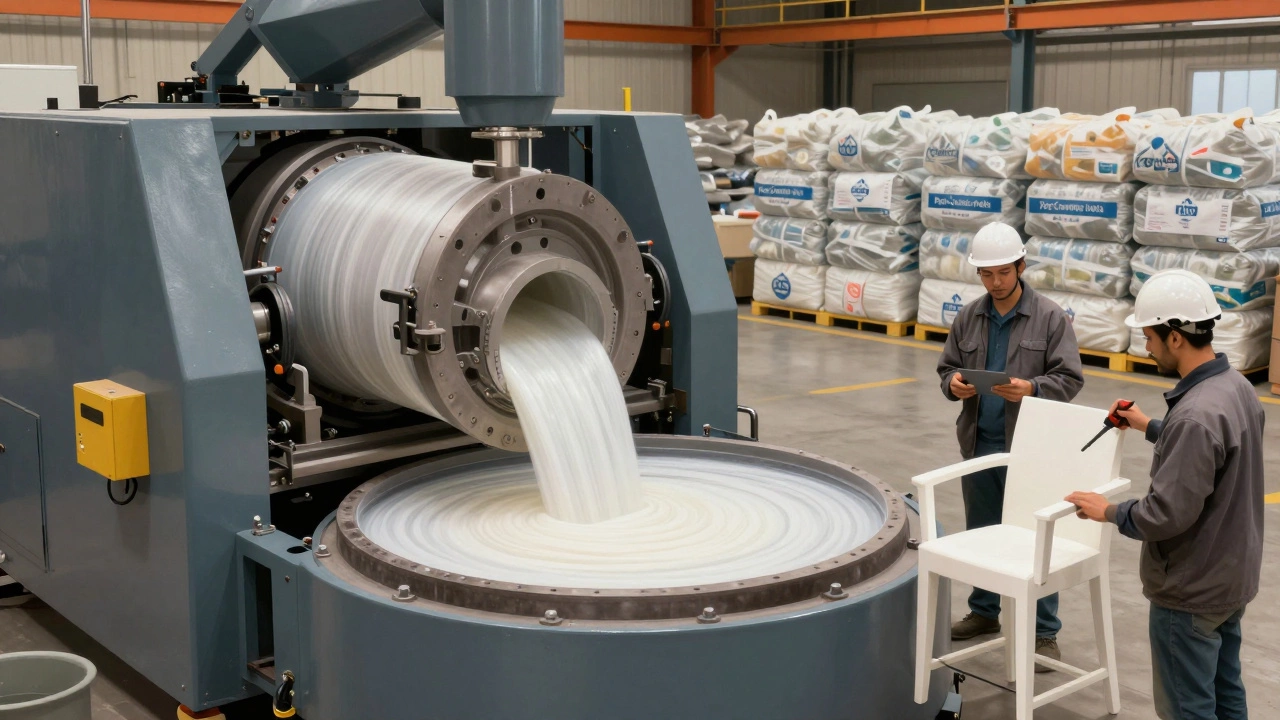
Think about what happens to your cheap plastic chair after two summers. It gets sunburned, turns chalky, cracks at the joints, and starts wobbling. POLYWOOD furniture doesn’t do that. Why? Because it’s designed for extreme conditions-like the coastlines of Maine or the desert heat of Arizona. The manufacturing process uses rotational molding, a technique borrowed from the marine industry. Molten plastic is spun inside a mold, creating seamless, hollow pieces with uniform wall thickness. No glue. No screws. No weak points.
Compare that to a $150 set from a big-box store. It’s injection-molded-fast, cheap, and full of seams. Those seams are where failure starts. POLYWOOD’s one-piece construction means it won’t snap if you lean back too hard. It won’t loosen when the temperature swings from -20°F to 110°F. That’s not luck. It’s precision engineering. And it costs more to produce. A single POLYWOOD chair takes 15 minutes in the mold. A budget chair takes 90 seconds.
It’s Made in the USA, Not Shipped from a Warehouse
POLYWOOD’s entire production line is based in Indiana. Every chair, table, and swing is assembled by American workers. That means paying fair wages, following OSHA safety standards, and dealing with U.S. labor costs. Most competitors outsource to factories in China, Vietnam, or Indonesia, where labor is a fraction of the price. But here’s the trade-off: those factories often cut corners on quality control. A POLYWOOD factory runs full inspections on every piece. Color consistency? Checked. Weight tolerance? Verified. Fit and finish? Approved by hand.
Shipping from Asia adds hidden costs too-port fees, tariffs, container delays, and the risk of damaged goods. POLYWOOD avoids most of that. Their furniture ships directly from the factory to your door. That’s not just convenient-it’s more reliable. And when you factor in the cost of replacing a cheap set every 2-3 years, POLYWOOD starts looking like a bargain.
The Color Doesn’t Fade-Because It’s Not Painted
Here’s a trick most cheap outdoor furniture uses: they paint the plastic. Then the sun bleaches it. In six months, your bright red bench looks like a faded ghost of itself. POLYWOOD doesn’t paint anything. Instead, they infuse the color into the plastic during the molding process. The pigment is mixed directly into the HDPE pellets before they melt. That means the color runs all the way through the material. Scratch it? No white underlayer. Sun damage? It doesn’t peel or flake. It just stays the same.
That’s why POLYWOOD offers a 20-year fade warranty. That’s not a promise-it’s a guarantee backed by accelerated weather testing. Their lab subjects samples to 10,000 hours of UV exposure, equivalent to 10 years of direct sunlight. Most brands test for 1,000 hours. The difference? You can still tell a POLYWOOD chair from 2015 apart from a new one. Most other brands? You’d need a calendar to know the difference.
It’s Designed to Last-Not to Be Replaced
Think about how often you replace your outdoor furniture. If you bought a $200 set five years ago, you’ve probably already replaced it once. Maybe twice. That’s $600 spent in five years. Now look at POLYWOOD: $800 for a dining set. But it’s still in perfect condition. No cracks. No rust. No fading. That’s $800 over 20 years. That’s $40 a year. Less than your monthly coffee habit.
POLYWOOD isn’t selling furniture. They’re selling longevity. And that’s why they don’t offer seasonal sales. They don’t need to. Their customers aren’t looking for a deal-they’re looking for a lifetime purchase. When you buy POLYWOOD, you’re not just paying for a chair. You’re paying for peace of mind. No more storing furniture in the garage every winter. No more worrying about rain damage. No more replacing broken slats.
It’s Not Just Furniture-It’s a System
POLYWOOD doesn’t just make chairs. They make a whole ecosystem. Modular components. Interchangeable parts. Matching ottomans, side tables, and umbrella bases designed to work together. You can start with a bench, add a table later, then throw in a swing. Everything fits. Everything matches. Everything is made from the same material, so it weathers the same way.
Compare that to buying a set from Amazon. You get a table and four chairs. One chair breaks. You can’t find the same model. The color’s discontinued. You’re stuck with mismatched pieces. POLYWOOD’s system means you can replace a single armrest if it gets damaged. They keep molds and parts available for decades. That’s rare. That’s thoughtful. That’s expensive to maintain-but priceless in the long run.
What You’re Really Paying For
So why is POLYWOOD expensive? Because you’re paying for:
- High-quality recycled HDPE, processed to industrial standards
- Rotational molding that creates seamless, durable pieces
- U.S.-based manufacturing with skilled labor and strict quality control
- Color infused into the material-not painted on
- A 20-year warranty that’s actually honored
- A design built to last two decades, not two seasons
- A system that grows with your outdoor space
It’s not about being fancy. It’s about being smart. If you live where winters are harsh, summers are brutal, or you just hate replacing things, POLYWOOD isn’t a luxury. It’s a practical choice. The math is simple: pay more now, or pay more later. Most people choose to pay more later. Then they wonder why their patio looks like a landfill.
Who Should Buy POLYWOOD?
POLYWOOD is perfect if:
- You want furniture that lasts 20+ years
- You live in a place with extreme weather
- You hate shopping for new patio sets every few years
- You care about sustainability and recycling
- You’re willing to invest once and forget about it
POLYWOOD isn’t for you if:
- You only use your patio in summer
- You plan to move in the next 2 years
- You’re on a tight budget and need something temporary
- You don’t mind replacing furniture every 3-4 years
There’s no shame in choosing cheap furniture. But if you’ve ever stood in your backyard, looking at your broken, faded set, and thought, ‘I wish I’d just spent more upfront,’ then POLYWOOD is the answer you didn’t know you were looking for.
Is POLYWOOD worth the high price?
Yes-if you plan to use it for more than 5 years. A $1,200 POLYWOOD dining set costs $60 a year over 20 years. A $300 set that breaks in 3 years costs $100 a year. Over time, POLYWOOD saves money, reduces waste, and eliminates the hassle of replacements.
Does POLYWOOD get hot in the sun?
It can, but not as much as metal or dark wood. POLYWOOD’s material has a lower heat absorption rate than aluminum or wrought iron. Lighter colors like White, Sand, or Driftwood stay cooler than dark colors like Charcoal or Espresso. For hot climates, choose lighter shades and add shade with an umbrella.
Can POLYWOOD be repaired if it breaks?
Yes. POLYWOOD keeps molds and replacement parts for decades. If a slat cracks or a leg wears down, you can order a direct replacement from their customer service. You don’t need to buy a whole new set. That’s rare in outdoor furniture.
Is POLYWOOD eco-friendly?
Extremely. Each piece uses 400-600 recycled plastic containers. The manufacturing process uses solar power, and the company recycles scrap material back into production. Unlike wood, it doesn’t require cutting trees or toxic sealants. It’s designed to be recycled again at the end of its life.
How does POLYWOOD compare to teak or metal furniture?
Teak is beautiful but expensive and requires annual oiling. Metal rusts, fades, and gets scorching hot. POLYWOOD needs zero maintenance-no sanding, no staining, no covering. It outperforms both in durability and ease of care, while matching their aesthetic appeal.