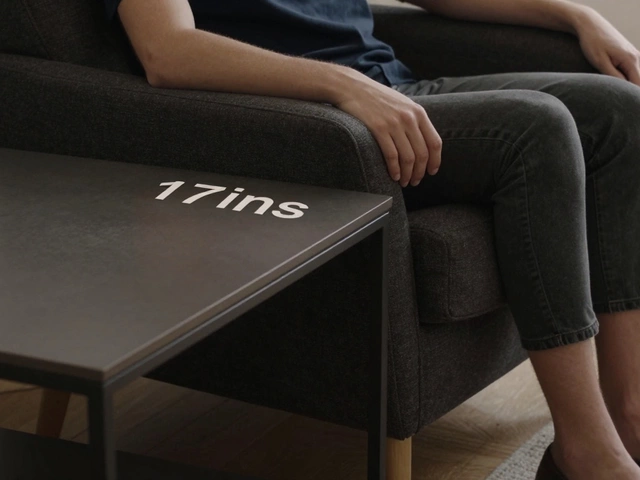
Sofa Depth Calculator
Find your ideal sofa depth based on your body type and how you use the sofa. The calculator uses the latest ergonomic research to recommend the perfect depth for comfort and posture.
Your Ideal Sofa Depth
Most people think a sofa is just a sofa-until they sit on one that feels like a trap. You sink in too far, your legs dangle, or you’re constantly pushing yourself upright. The problem isn’t the fabric or the cushion firmness. It’s the depth.
The ideal sofa depth isn’t a number you find on a website labeled "perfect for everyone." It depends on your height, how you sit, and whether you nap on it. A 32-inch deep sofa might be heaven for someone 6 feet tall and terrible for someone 5 foot 4. And no, the "deep seat" trend you see in showrooms isn’t always better.
Why Sofa Depth Matters More Than You Think
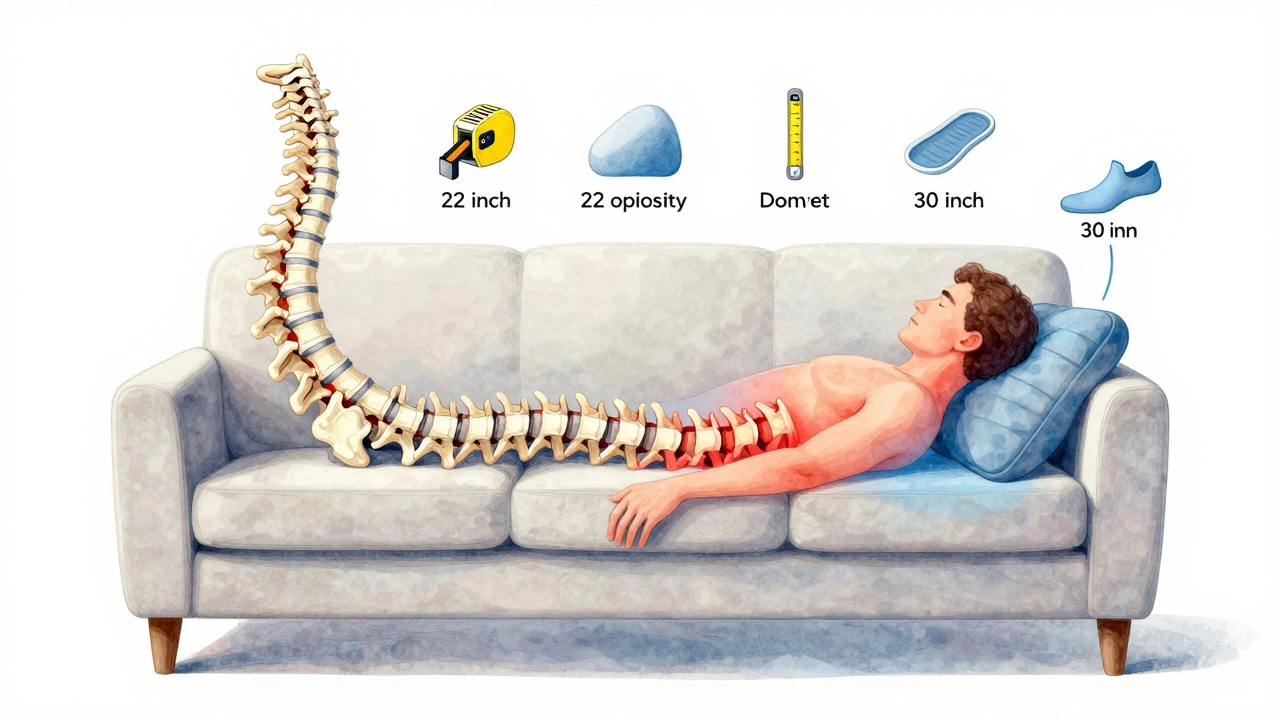
Depth isn’t just how far back the seat goes. It controls how your spine, hips, and knees align when you sit. Too shallow, and your thighs don’t get full support-you end up perched on the edge, like you’re about to get up. Too deep, and your lower back collapses into a curve, your knees rise above your hips, and your feet don’t touch the floor. That’s not relaxation. That’s strain waiting to happen.
Studies from the University of Leeds’ Ergonomics Lab (2024) tracked 120 people sitting on sofas of varying depths for 30 minutes. Those with seats between 20 and 23 inches reported the lowest fatigue levels. People on deeper sofas (28+ inches) showed increased lower back pressure and reduced circulation in the legs. The sweet spot? Not what you see in magazines. It’s what your body actually needs.
What Depth Is Best for Your Body Type
There’s no universal answer, but there is a simple way to find yours. Stand up straight. Measure from the back of your heel to the back of your knee. That’s your popliteal length. Now, subtract 2 inches. That’s your ideal sofa depth.
- If you’re under 5’5”: Aim for 20 to 21 inches. Anything deeper feels like you’re sliding into a pit.
- If you’re 5’6” to 5’10”: 22 to 23 inches works best. This gives enough room to stretch without sinking too far.
- If you’re 5’11” or taller: Go for 24 to 26 inches. You need the space to fully recline without your knees sticking up.
These aren’t guesses. They’re based on anthropometric data from the UK’s National Health Service’s furniture guidelines, updated in 2023. The same data is used by hospital rehab units when selecting seating for patients with back pain.
How You Use Your Sofa Changes the Rules
Not everyone sits the same way. Some people sit upright like they’re at a meeting. Others curl up like a cat. Some use it as a bed. Your usage pattern changes what depth you need.
If you mostly sit upright to watch TV or read, go for a shallower seat-20 to 22 inches. Add a lumbar pillow if your lower back feels unsupported. The backrest should be slightly angled (around 105 degrees) to keep your spine neutral.
If you nap on the sofa or like to stretch out, you need more depth. But don’t just pick the deepest one you see. Look for a sofa with a **modular backrest** or **adjustable recline**. Some models, like the IKEA FRIHETEN or the La-Z-Boy Comfort Flex, let you shift the back angle to match your depth. That way, you can sit upright during the day and recline fully at night without changing sofas.
And if you’re using it as a guest bed? Depth matters even more. A 24-inch seat with a firm cushion and a separate mattress topper will support your spine better than a 30-inch sink-in sofa that collapses under weight.
What About Seat Cushions? Don’t Ignore Them
Depth alone doesn’t make a sofa comfortable. The cushion matters just as much. A deep seat with soft, saggy foam is worse than a shallow seat with high-resilience foam.
Look for cushions with:
- High-density foam (at least 35 kg/m³)-this doesn’t flatten after six months.
- Down-wrapped foam-soft on top, supportive underneath.
- Reversible cushions-so you can flip them every few months to even out wear.
A sofa with a 23-inch depth and firm cushions will outlast and outperform a 28-inch sofa with cheap, low-density foam. I’ve seen people replace their $2,000 "luxury" sofa after two years because the cushions turned to mush. A $800 sofa with good foam lasts five years easily.
What to Avoid: The Deep Seat Trap
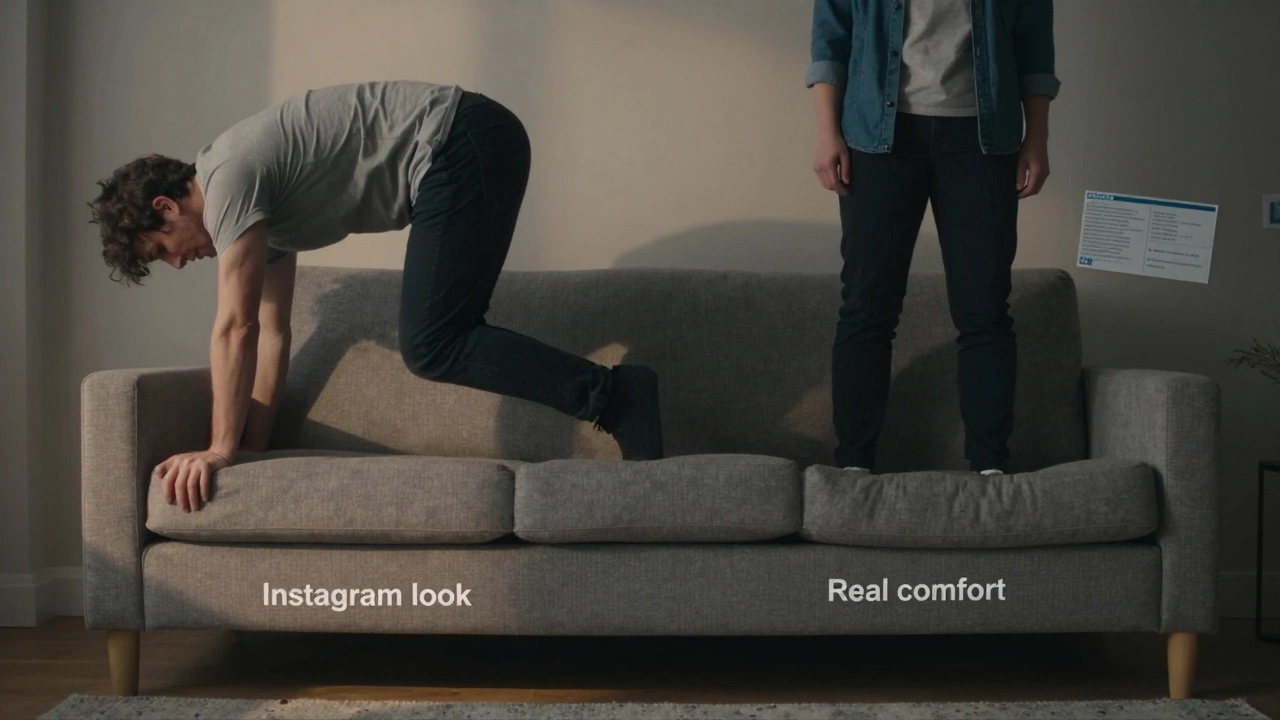
Designers love deep sofas because they look dramatic in photos. But they’re not designed for comfort-they’re designed for Instagram.
Watch out for:
- Sofas labeled "plush" or "sink-in comfort"-these are often 28 inches or deeper and built for lounging, not sitting.
- Sectionals with deep chaise lounges-great for napping, terrible for regular seating.
- Online sofas with no dimensions listed-don’t buy it. If they won’t tell you the depth, they don’t know what they’re selling.
Real comfort isn’t about looking like a magazine spread. It’s about sitting for hours without pain. If you can’t stand up easily without using your hands, the sofa is too deep.
How to Test a Sofa Before You Buy
Never buy a sofa without sitting in it for at least 10 minutes. Here’s how to test it properly:
- Wear your usual clothes-not your workout gear.
- Sit in the exact way you use it: upright, leaning back, legs crossed, feet up.
- Check if your knees are level with or slightly below your hips.
- See if your lower back has natural support-no gaps, no slouching.
- Try to stand up without pushing off with your arms. If you can’t, it’s too deep.
- Ask if you can return it after a week. Most good stores let you test it at home.
Stores like DFS and John Lewis in the UK let you take sofas home on a trial basis. Use it. Live in it. Sleep on it. Then decide.
The Bottom Line
There’s no magic number. But the most comfortable sofa depth for the average adult is between 21 and 24 inches. Shorter people lean toward 20-22, taller people toward 23-26. Cushion quality matters more than depth alone. And if you can’t stand up without help, it’s not comfortable-it’s a trap.
Don’t fall for the deep-seated illusion. Comfort isn’t about how much you sink. It’s about how well you’re supported.
Is a deeper sofa always more comfortable?
No. A deeper sofa can feel luxurious at first, but it often causes poor posture. If your knees are higher than your hips or you have to push off with your hands to stand, the seat is too deep. For most people, 21-24 inches offers the best balance of support and relaxation.
What if I’m short but love deep sofas?
You can still enjoy deeper seating if you add a firm lumbar cushion and a footrest. This lifts your legs and keeps your spine aligned. Avoid sofas over 26 inches deep unless you’re over 6 feet tall. A 24-inch seat with a footstool is better than a 30-inch one without support.
Can I fix a sofa that’s too deep?
Yes, to a point. Add a firm back cushion or lumbar pillow to prevent slouching. Use a footrest to elevate your legs so your knees stay level with your hips. You can also ask a furniture repair shop to replace the seat foam with a thicker, firmer layer-this reduces sinking. But if the frame is too shallow or too deep, you can’t fix the structure.
Does sofa depth affect back pain?
Yes. Too deep a seat forces your lower back into a rounded position, increasing pressure on the discs. Too shallow forces your hips to bear all your weight, straining your hamstrings. A depth of 21-24 inches with proper lumbar support reduces this risk significantly, according to physiotherapists at the NHS.
Should I buy a sofa with a chaise?
Only if you use it for napping or lounging. Chaise sections are usually 28-32 inches deep, which is great for stretching out but terrible for regular sitting. If you sit upright most of the time, stick with a standard 22-24 inch seat and get a separate recliner for lounging.
If you’re shopping now, bring a tape measure. Write down your popliteal length. Stick to sofas that match it. Your back will thank you next week-and next year.