Bookcase Safety: How to Keep Your Shelves Stable and Child‑Proof
Ever wondered why a bookcase can feel like a wobble waiting to happen? It’s not just the weight of the books – it’s how you set it up. A sturdy bookcase protects your wall, your floor, and most importantly, the kids who love to climb. Below are real‑world tips you can apply right now.
Anchor It Properly
The single most effective move is to anchor the unit to a wall stud. Grab a simple L‑bracket, line it up with the top rail, and screw it into the stud with a 2‑inch wood screw. No fancy tools required – a drill or screwdriver does the job. If you can’t find a stud, use a drywall anchor rated for at least 100 lb. This stops the whole piece from tipping forward when someone leans on it.
Distribute Weight Wisely
Don’t dump the heavy encyclopedias on the top shelf. Place the heaviest items on the bottom and work your way up. A good rule of thumb is: the bottom three shelves hold 60 % of the total load, the middle 30 %, and the top 10 %. This keeps the centre of gravity low and makes the unit less likely to sway.
Also, avoid over‑loading a single shelf. Check the manufacturer’s weight limit – most bookcases are good for 30–50 lb per shelf. If you need more capacity, add a supporting bracket under the shelf or install a metal reinforcement rail.
Floor placement matters, too. Keep the bookcase away from high‑traffic zones where it might get nudged. If you must put it near a doorway, consider a slightly angled position so the door can’t push directly into the back of the unit.
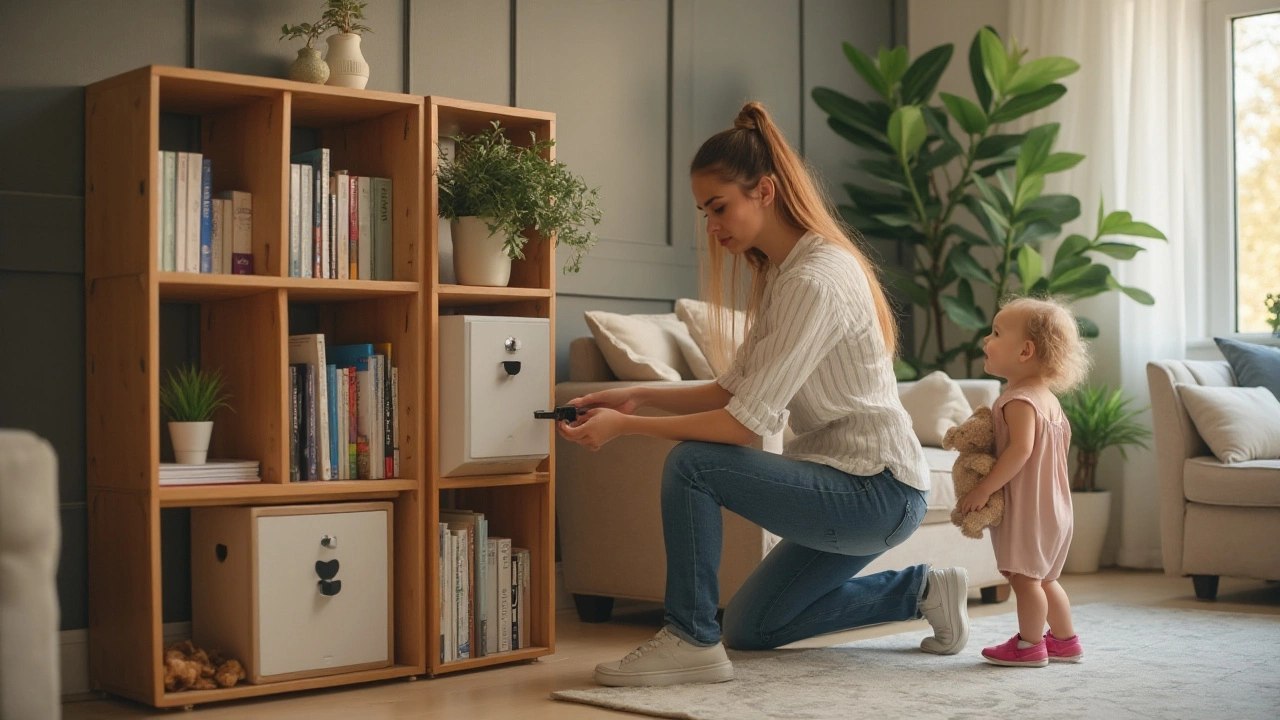
For families with toddlers, add a safety strap at child height. These straps are cheap, easy to install, and act as a final “stop‑gap” if a curious hand tries to climb.
Finally, inspect the piece regularly. Tighten any loose screws, check that brackets haven’t loosened, and make sure the wall anchors haven’t shifted. A quick quarterly check takes less than five minutes and can save you from costly accidents.
By anchoring, balancing weight, and doing a regular check‑up, you turn a simple bookcase into a safe, reliable piece of furniture. Your books, décor, and little explorers will thank you.