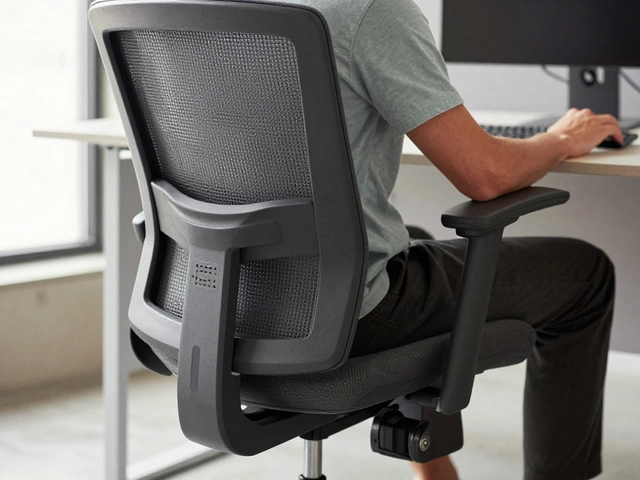
Best Office Chair Materials: What to Look For and Why It Matters
Choosing an office chair isn’t just about color or price. The material you sit on determines comfort, how long it lasts, and even how easy it is to keep clean. Below we break down the most popular options so you can pick the right one for your work‑from‑home setup or corporate office.
Mesh – Breathable and Budget‑Friendly
Mesh backs are a go‑to for many because they let air flow, keeping you cool during long meetings. The flexible weave conforms to your spine, offering decent support without a heavy cushion. It’s also lightweight, which makes moving the chair around simple. The downside? Mesh can sag over time if the frame isn’t sturdy, and it doesn’t feel as plush as padded options.
Leather & Faux Leather – Classic, Easy to Clean
Real leather screams luxury. It’s hardwearing, ages beautifully, and wipes down with a damp cloth. However, genuine leather is pricey and can feel sticky in hot rooms. Faux leather mimics the look at a lower cost and resists moisture better, but it may crack after years of heavy use. Both choices work well in formal settings where a sleek profile matters.
Fabric upholstery offers a soft feel and a wide range of colors and patterns. It’s great for people who want a cozy seat and don’t mind a bit of extra cleaning. Look for high‑density weave fabrics made from polyester or nylon—they resist stains and wear better than low‑quality cotton blends. Some fabrics even have antimicrobial treatments, which is a bonus for shared workspaces.
Wood & Metal Frames – The Hidden Strength
While the seat material gets most of the attention, the chair’s frame decides its lifespan. Solid wood frames add an elegant touch and can support heavier loads, but they’re heavier to move. Powder‑coated steel or aluminum frames are lightweight, rust‑proof, and often cheaper. If you’re buying a custom chair, ask the maker about reinforcing joints with metal brackets for extra durability.
For sustainable shoppers, look for recycled upholstery fibers or responsibly sourced wood. Many bespoke manufacturers, like Crafted Furniture Solutions, offer eco‑friendly options that don’t sacrifice comfort.
How to Pick the Right Material for You
Start with your work style: If you sit for eight hours straight, breathable mesh or a well‑ventilated fabric will keep you comfortable. If you entertain clients, leather (real or faux) gives a professional vibe. Consider the climate—hot rooms favor mesh, while cooler offices can handle leather or fabric.
Next, think about maintenance. Kids or pets? A leather or high‑grade fabric that wipes clean is less stressful. Allergies? Look for hypoallergenic fabrics or mesh that doesn’t trap dust.
Finally, set a budget. You can get a solid mesh chair for under £100, while premium leather can push past £500. Remember, a higher upfront cost often means longer life and fewer replacements.
At Crafted Furniture Solutions we can custom‑tail an office chair to match your preferred material, ergonomics, and style. Whether you need a sleek leather executive seat or a breathable mesh workstation, our craftsmen will build a chair that fits your space and your budget.
Choosing the right material isn’t just about looks—it’s about staying comfortable, healthy, and productive every day. Use this guide to compare options, ask the right questions, and invest in a chair that works as hard as you do.