Living Room Color Contrast Tool
Find Your Perfect Wall-Couch Combination
This tool helps you determine whether your walls should be lighter or darker than your couch based on your living room characteristics.
Your Recommendation
For your living room conditions, the ideal approach is:
Walls should be [wall contrast] than your couch.
This creates the perfect balance of [result benefit].
When you’re setting up a living room, one of the most common questions isn’t about the sofa itself - it’s about what’s around it. Should walls be lighter or darker than your couch? It’s not just about taste. It’s about how light moves through the space, how your furniture reads from across the room, and whether your coffee table even feels like it belongs.
Why Wall Color Matters More Than You Think
A wall isn’t just a surface. It’s the backdrop your couch sits against. If your walls are too close in tone to your sofa, the couch disappears. Too far apart, and it looks like it’s floating in a void. The right contrast makes the room feel intentional, not accidental.
In a 2023 survey of 1,200 UK homeowners, 68% said their living room felt "more spacious" when walls were lighter than their main sofa. But 52% of those same people also said they felt "cozier" when walls were darker. There’s no single answer - only context.
Lighter Walls, Darker Couch: The Classic Contrast
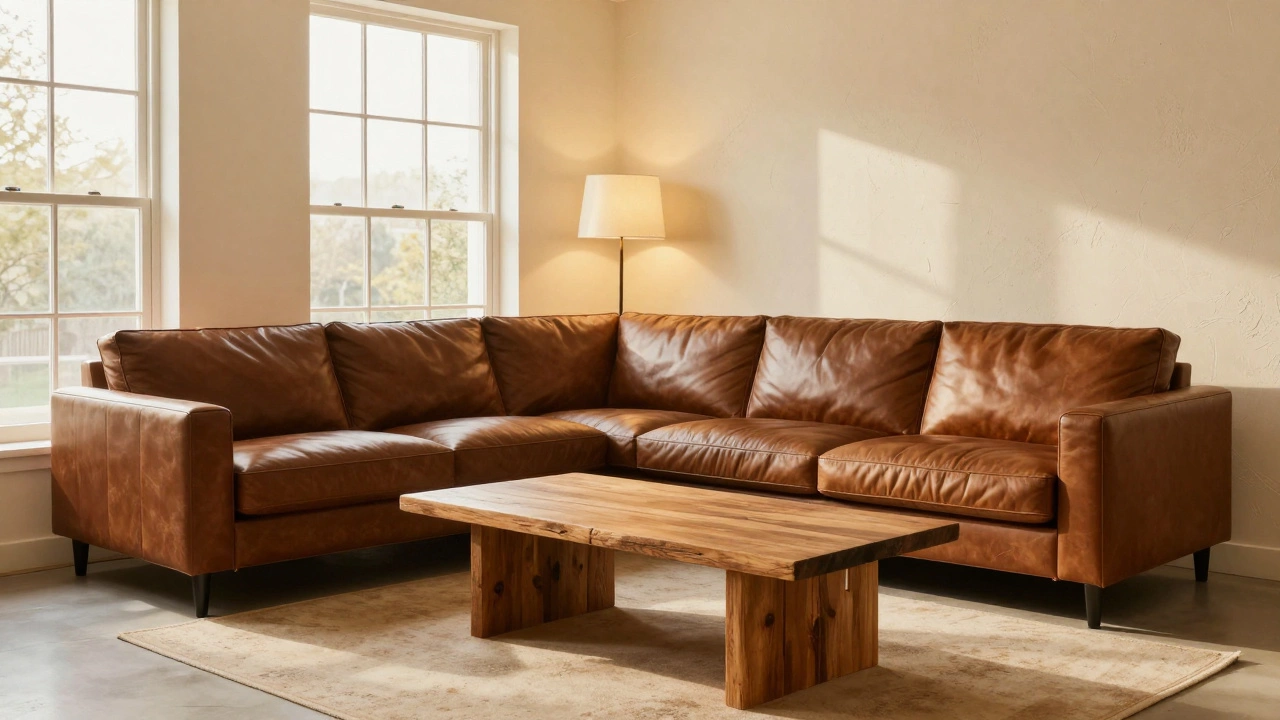
This is the go-to for most designers. Think white, cream, or soft gray walls with a charcoal, navy, or deep brown leather couch. Why does it work? Because light walls reflect natural light, making the room feel bigger and brighter. A darker couch becomes a grounding element - a visual anchor.
Try this: If your couch is a rich espresso brown, paint the walls a warm off-white like Benjamin Moore’s "Simply White". The contrast gives depth without heaviness. Your coffee table, whether it’s glass, wood, or metal, will pop because it sits between two clear visual zones.
This combo works best in rooms with decent natural light. If your living room faces north or gets little sun, lighter walls help compensate. But don’t go too pale - anything below a 70% LRV (Light Reflective Value) can start to feel cold. Stick to warm undertones: beige, greige, or soft cream.
Darker Walls, Lighter Couch: The Modern Statement
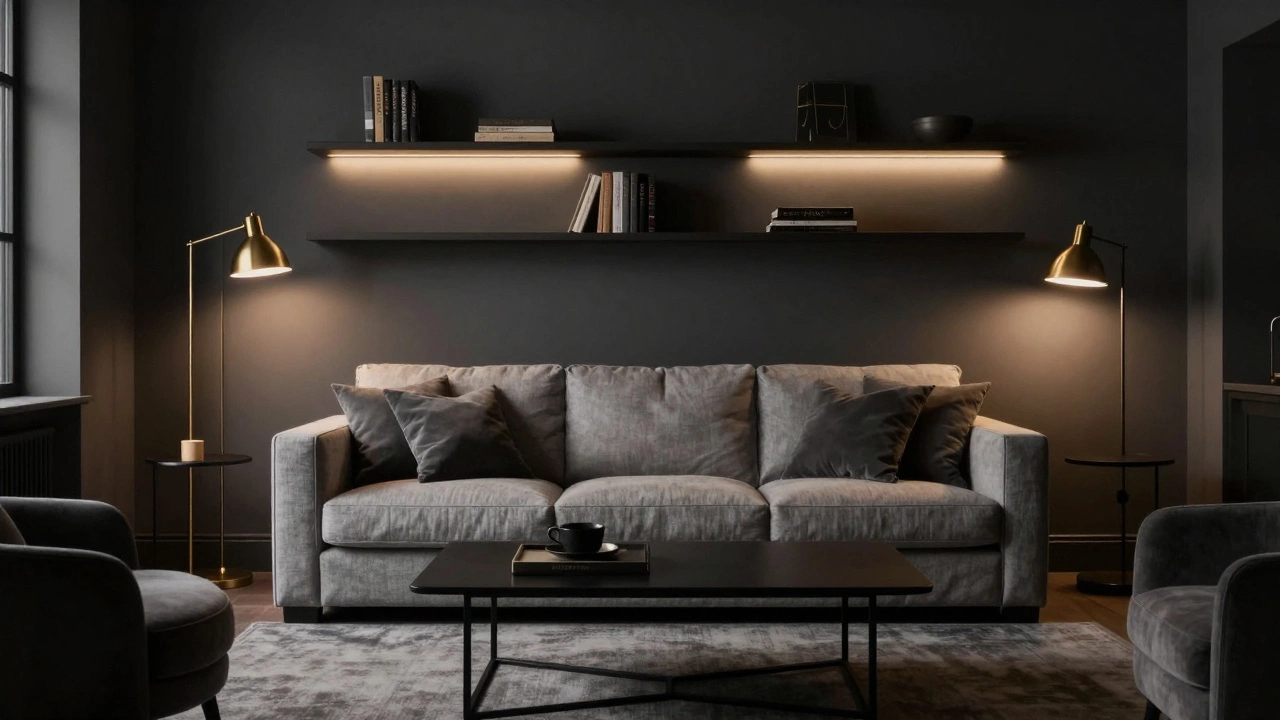
Dark walls are having a moment. Deep teal, charcoal, even black - these colors make a couch feel like the star of the show. A light gray or cream sofa against a dark wall creates drama. It’s not for everyone, but if you want a room that feels luxurious and intimate, this is your move.
Here’s the catch: you need light. Not just from windows, but from lamps. A single overhead light won’t cut it. Layer your lighting: floor lamps on either side of the couch, a table lamp on the coffee table, and maybe even LED strips under shelves. Without good lighting, dark walls swallow the room.
Try this: A dove-gray linen sofa against a wall painted with Farrow & Ball’s "Railings". The result? A moody, gallery-like feel. Your coffee table - perhaps a dark walnut or a matte black metal - becomes part of the rhythm, not an afterthought.
Matching Wall and Couch: The Risky Move
Some people try to match their couch and wall color exactly. "It’s calming," they say. But unless you’re going for a monochrome art installation, this usually backfires.
When walls and couches are the same shade, the room loses depth. The couch blends in. The coffee table looks lost. You need texture, pattern, or tone variation to create separation. If you love a single color, go one shade lighter or darker. A taupe couch with a taupe wall? Too flat. A taupe couch with a light greige wall? That’s harmony.
Coffee Tables Don’t Just Sit There - They Connect
You didn’t ask about coffee tables, but they’re the glue. A wall-couch contrast creates a visual corridor. Your coffee table sits right in the middle of it. If your walls are light and couch is dark, a medium-toned wood table (oak, walnut) bridges the gap. If walls are dark and couch is light, a black metal or glass table adds sharpness.
Here’s a simple rule: Your coffee table should be a tone between your wall and couch. Not exactly in the middle - but close enough to feel like it belongs. If your wall is 80% light and your couch is 20% dark, aim for a table around 50-60%. That’s the sweet spot.
What About Patterns and Textures?
Color isn’t everything. A navy velvet couch looks totally different than a navy linen one. A white wall with subtle texture (like lime wash or plaster) behaves differently than a flat white paint.
Texture adds dimension. If your couch is smooth and shiny, pair it with a matte wall. If your couch is chunky knit, a smooth, light wall keeps it from overwhelming the space. Your coffee table’s material matters too. A stone top adds weight. A glass top adds lightness. Match the energy.
Room Size and Shape Change Everything
Small room? Go lighter on the walls. Dark walls in a tight space make it feel like a closet. High ceilings? You can afford darker walls - they draw the eye up. Low ceilings? Keep walls light to avoid crushing the space.
Long, narrow rooms benefit from a darker end wall. Paint the wall behind the couch dark, and the far wall light. It creates a sense of balance. A square room? You have more freedom. Play with contrast.
Real-Life Examples from Leeds Living Rooms
On a street in Headingley, a couple chose soft sage walls with a deep olive green sectional. The coffee table? A reclaimed oak slab. The result? A calm, earthy space that feels like a retreat. No one mentioned the walls - they just said it felt "right".
Another in Roundhay used charcoal walls with a cream linen sofa. They added brass floor lamps and a black metal coffee table. The contrast was bold, but the lighting saved it. "It doesn’t feel dark," they told me. "It feels rich."
Quick Decision Checklist
- Do you have lots of natural light? → Go with lighter walls, darker couch.
- Is your room small or north-facing? → Stick to light walls.
- Do you want drama and intimacy? → Try dark walls, light couch.
- Is your coffee table a statement piece? → Make sure it sits between wall and couch tones.
- Are your walls textured? → You can go darker without feeling claustrophobic.
Final Thought: It’s Not About Rules - It’s About Feeling
There’s no rule that says walls must be lighter. But there is a rule that says if your couch blends into the wall, you’ve lost something. The goal isn’t to pick the "correct" color - it’s to create a space where your couch feels like it belongs, your coffee table feels intentional, and the room feels like it breathes.
Test it. Tape up swatches. Live with them for a few days. Watch how the light changes from morning to night. Your eyes will tell you what your brain can’t.
Should I paint my walls the same color as my couch?
Generally, no. Painting walls the same color as your couch makes the sofa disappear into the background, which flattens the room. Instead, choose a tone that’s slightly lighter or darker. A 10-20% difference in lightness creates enough contrast to define the space without clashing.
What if my couch is patterned?
If your couch has a pattern, pick a wall color that matches one of the dominant tones in the fabric - not the background, but the secondary color. For example, if your couch has navy, cream, and gold stripes, pick a wall in soft cream or warm gray. This ties the room together without competing.
Does the coffee table color need to match the walls or couch?
No, and it shouldn’t. The coffee table should sit between the wall and couch tones. If walls are light and couch is dark, pick a medium tone - like walnut or brushed brass. This creates balance. Matching it to either the wall or couch makes the table feel like an afterthought.
Can I use dark walls with a light couch in a small room?
Yes - but only if you layer the lighting. A dark wall in a small room can feel cozy, not cramped, if you have at least three light sources: a floor lamp, a table lamp, and overhead ambient lighting. Avoid single ceiling lights. Use warm white bulbs (2700K-3000K) to keep it inviting.
What’s the easiest way to test wall colors before painting?
Buy small paint samples (usually $5-$10) and paint 2x2 foot squares on the wall. Move them around - test near windows, across from the couch, and at different times of day. Live with them for 3-4 days. Your gut will tell you which one feels right.