Outdoor Furniture Cost Calculator
Compare Your Investment
See how much you'll save by choosing quality outdoor furniture over time
Total Cost Over 10 Years
Cheap Set:
Premium Set:
You Save:
Why This Matters
Key Insight Premium furniture lasts longer, reducing replacement costs and landfill waste
According to UK Furniture Recycling Council, 80% of outdoor furniture ends up in landfills within 5 years
You’ve seen the prices. That teak dining set costs as much as a used motorcycle. The aluminum lounge chairs with all-weather cushions? More than your last smartphone. And yet, people keep buying them. Why? Is expensive outdoor furniture just a status symbol, or is there a real reason to pay more?
The short answer: yes, it’s often worth it-if you know what you’re paying for. But not every expensive piece is a good buy. The difference between a $1,500 set that lasts 15 years and one that falls apart in three comes down to materials, construction, and real-world performance. Let’s break it down.
What You’re Really Paying For
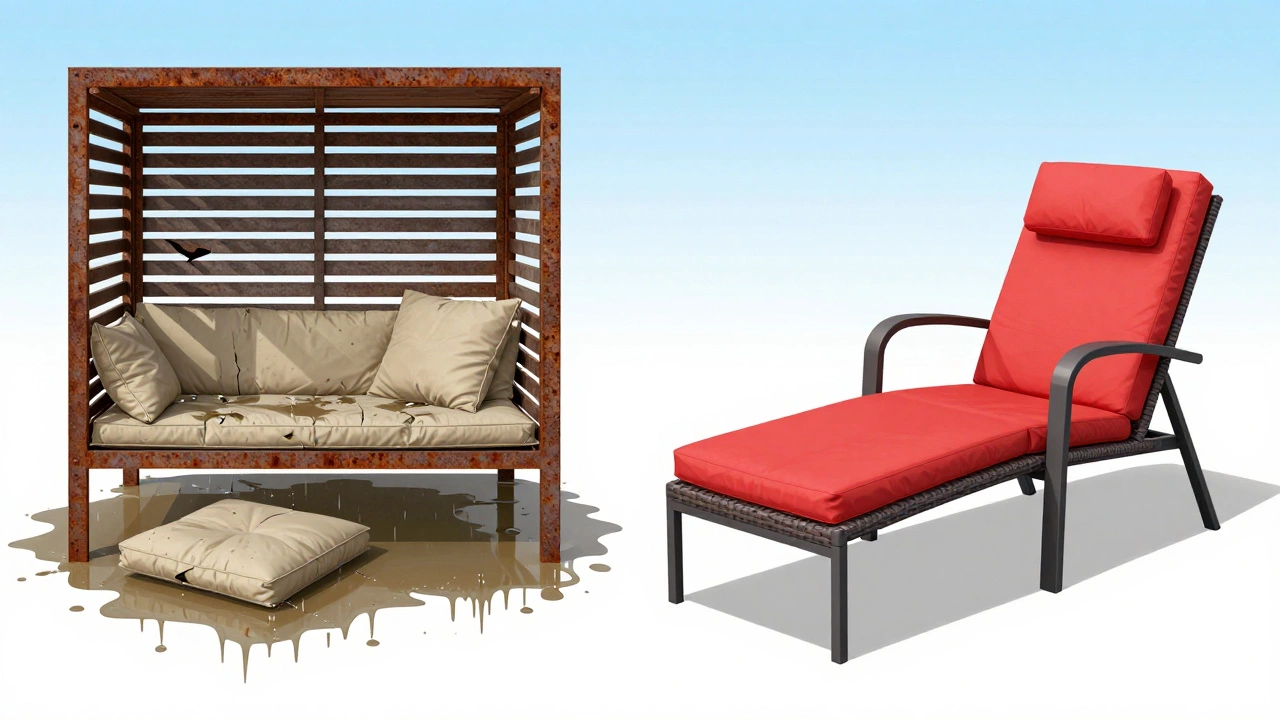
When you pay $2,000 for a set of outdoor chairs instead of $500, you’re not just buying aesthetics. You’re buying longevity. Cheap outdoor furniture usually means one of three things: thin metal that rusts, low-grade plastic that cracks in cold weather, or fabric that fades and mildews after one rainy season.
Expensive outdoor furniture uses materials built to last:
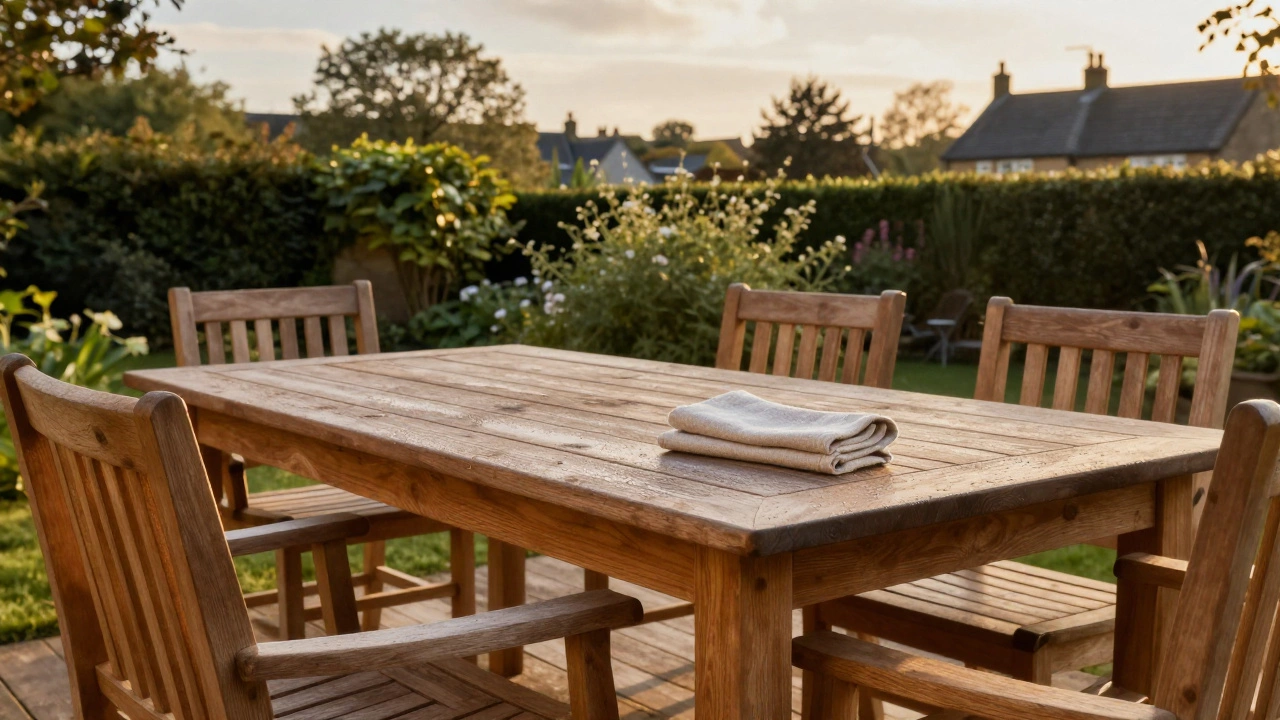
- Teak wood-naturally oily, resistant to rot, and doesn’t warp. A well-maintained teak table can last 25+ years. In Leeds, where damp winters are the norm, this matters.
- Aluminum frames with powder coating-unlike cheap steel, it won’t rust. Powder-coated finishes are baked on, not sprayed, so they don’t chip or peel after a few seasons.
- Marine-grade polymer (HDPE) wicker-not plastic wicker. This is synthetic fiber woven over an aluminum frame. It doesn’t crack in freezing temps, and UV stabilizers prevent fading. Brands like Tropitone and Brown Jordan use this.
- Performance fabrics-Sunbrella, Outdura, or similar. These are solution-dyed acrylics. Water beads off. Mildew won’t grow. Color stays vibrant for a decade. A $300 cushion set made from this lasts longer than three cheap polyester ones.
These aren’t marketing buzzwords. They’re engineering choices. You can test them yourself: rub a cheap plastic chair with your fingernail-it’ll scratch. Try the same on a high-end HDPE wicker? Nothing. That’s the difference.
The Real Cost of Cheap Furniture
Let’s say you buy a $600 patio set. It looks great in the store. You use it for two summers. Then the cushions get soggy. The metal legs rust through. The plastic slats snap in winter. You toss it. You replace it. Again. In five years, you’ve spent $3,000.
Now, the $2,200 set. You pay more upfront. But after five years? It still looks new. You clean it once a season. You replace the cushions once every 7-8 years-maybe $400. Total spent in five years: $2,600.
That’s not a big difference. But here’s the kicker: after 10 years, your cheap set is in the landfill. Your expensive set? Still in use. And you’ve only spent about $2,800 total. Meanwhile, someone else is on their third set.
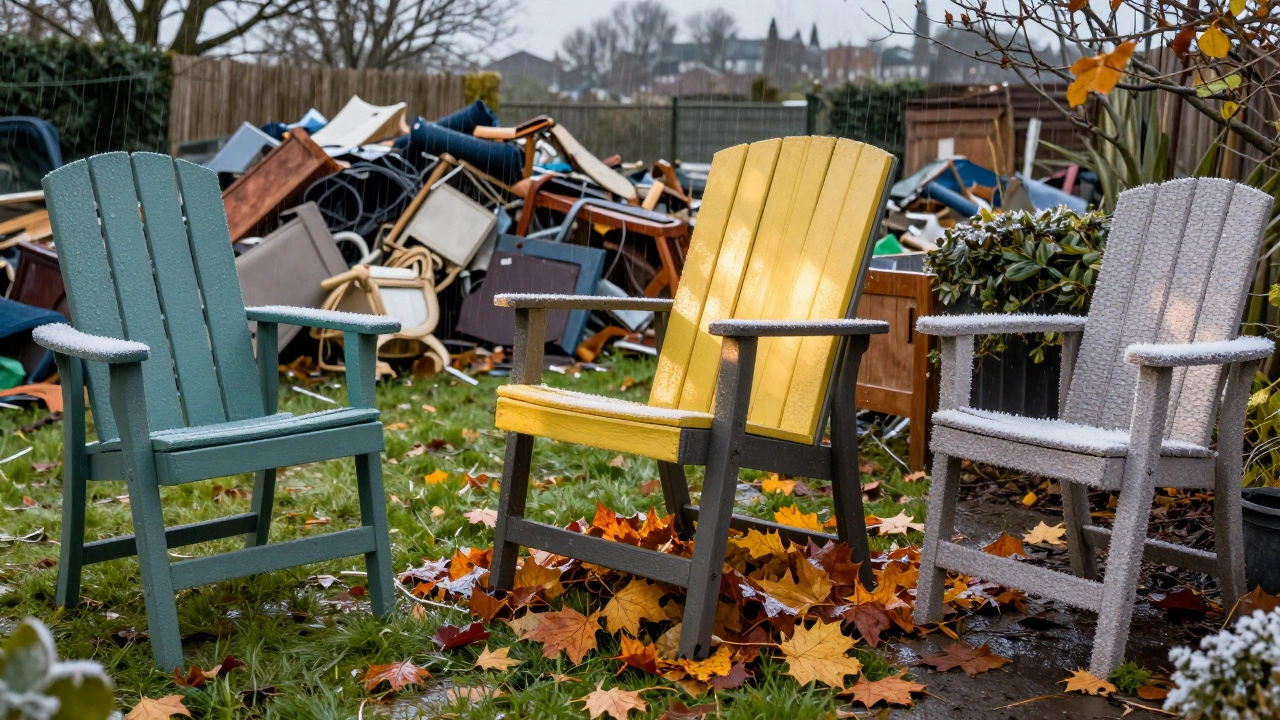
It’s not about being rich. It’s about avoiding waste. In a world where 80% of outdoor furniture ends up in landfills within five years (according to the UK Furniture Recycling Council), buying once and buying right makes sense.
What to Look for Before You Buy
Not all expensive furniture is good. Some brands charge more for name recognition alone. Here’s how to avoid overpaying:
- Check the frame material-If it’s steel, ask if it’s powder-coated. If it’s not, walk away. Steel rusts. Aluminum doesn’t.
- Ask about the cushion fill-High-end cushions use quick-dry foam, not cheap polyester batting. Press it. If it doesn’t spring back fast, it’ll flatten in months.
- Look at the weave-Real HDPE wicker feels dense and slightly flexible. Cheap imitation wicker feels brittle. Tap it with your knuckle. A dull thud? Good. A sharp crack? Bad.
- Check the warranty-A 10-year warranty on the frame? That’s a sign they believe in their product. A 1-year warranty? Red flag.
- Test the fit-Sit on it. Lean back. Does it feel solid? Or does it wobble? A $1,800 chair that wobbles isn’t worth it.
Also, buy from a brand that sells directly to consumers. Many high-end retailers mark up prices 80% just for showroom space. Brands like Polywood, Harmonia Living, and Tropitone sell online at fair prices. You don’t need to visit a fancy garden center to get quality.
Is It Worth It If You Don’t Use It Every Day?
You might think: “I only use my patio in summer. Why spend so much?”
Here’s the truth: outdoor furniture doesn’t need daily use to justify its cost. It needs reliability. Think of it like a good pair of boots. You don’t hike every day, but when you do, you want them to hold up. Same with outdoor seating.
In Leeds, spring showers, autumn gales, and winter frost are constant. A cheap chair left out in March will be brittle by April. A quality one? It sits there, untouched, and still works perfectly when you finally sit down in June.
And let’s not forget peace of mind. You don’t have to rush to cover it before rain. You don’t need to store it every winter. You don’t need to replace it every few years. That’s not luxury. That’s convenience.
When Expensive Furniture Isn’t Worth It
There are exceptions. If you rent your home? Maybe skip the high-end set. You can’t take it with you. If you live in a tiny garden or balcony? A compact, affordable set might be better. If you’re planning to move in two years? Don’t over-invest.
Also, avoid “designer” outdoor furniture with no functional upgrades. A $3,000 chair with a fancy curve but thin cushions? You’re paying for style, not substance. Look for substance first.
Bottom Line: Buy Once, Enjoy Forever
Expensive outdoor furniture isn’t a luxury-it’s a smart long-term decision. It saves money over time, reduces waste, and gives you something beautiful and reliable every time you step outside.
Don’t buy the most expensive thing on the shelf. But don’t buy the cheapest either. Find the middle ground: solid materials, a decent warranty, and honest reviews. A $1,500-$2,000 set from a reputable brand will outlast, outperform, and outshine everything else in your garden.
And in the end, that’s not just about furniture. It’s about choosing quality over clutter.