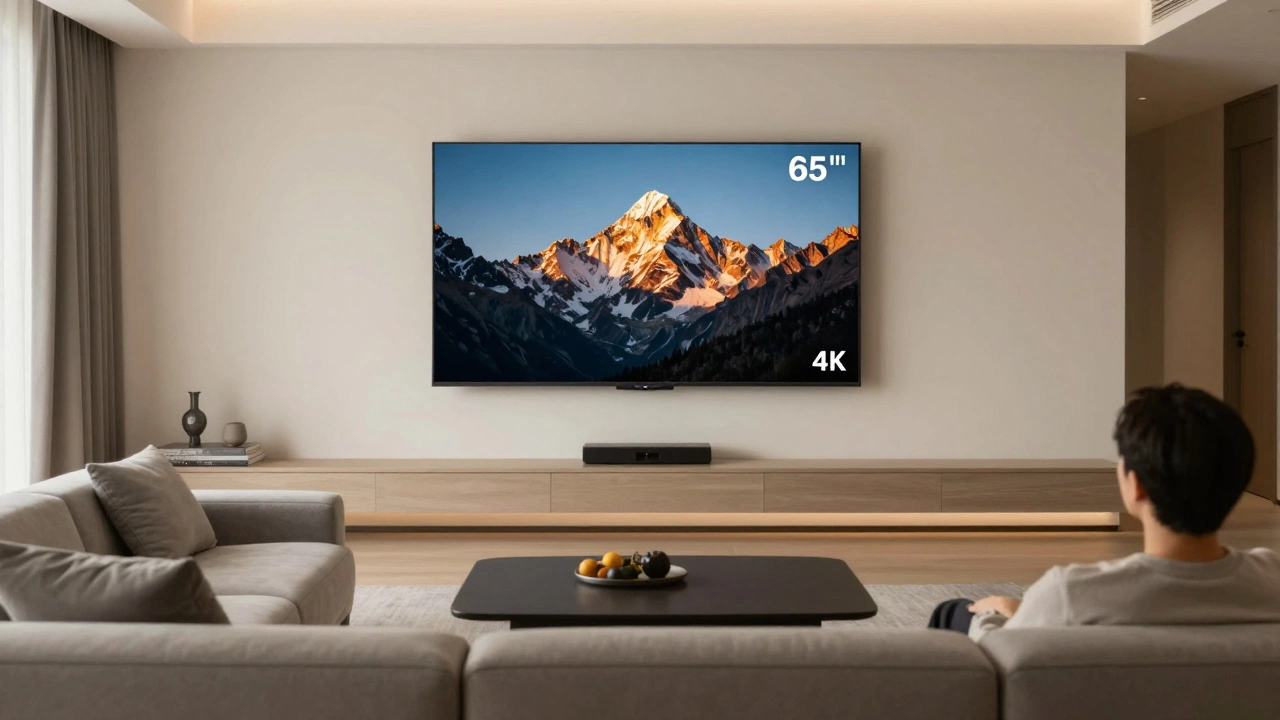
TV Viewing Distance Calculator
Optimal Viewing Distance Calculator
Ever sat on your couch and had to crane your neck to see the TV? Or felt like you’re squinting just to make out the characters on screen? You’re not alone. Getting the right distance between your couch and TV isn’t just about comfort-it’s about how your brain processes the image, how your eyes relax, and even how your coffee table fits into the whole setup.
Start with the screen size
The size of your TV is the first thing that matters. A 55-inch screen isn’t the same as a 75-inch one when it comes to how far back you should sit. The magic number most experts use is 1.5 to 2.5 times the diagonal screen size. So if you’ve got a 65-inch TV, multiply that by 1.5 to get 97.5 inches-that’s about 8 feet. Multiply by 2.5 and you get 162.5 inches, or just over 13 feet. That gives you a range: sit between 8 and 13 feet away.Why this range? Because your eyes need to take in the whole picture without straining. Too close, and you’ll see the pixels, feel overwhelmed, and get eye fatigue. Too far, and the screen feels small, like watching a postage stamp. That’s why 4K TVs changed the game. You can sit closer to a 4K screen than you could to a 1080p one and still get a smooth, crisp image. For a 65-inch 4K TV, 6 to 8 feet is often perfect.
Don’t ignore your coffee table
Your couch isn’t floating in space-it’s part of a system. The coffee table sits between you and the TV, and if it’s too close, it becomes a visual obstacle. Most people put their coffee table about 14 to 18 inches from the front of the couch. That’s fine for reaching for snacks, but if your couch is only 5 feet from the TV, now you’ve got a table right in the middle of your viewing line. That’s a distraction. You’re not looking at the screen-you’re looking over a wooden slab.Try this: sit on your couch and look straight ahead. If your coffee table blocks more than the bottom 10% of the screen, it’s too close. Move it back a few inches. You’ll notice the room feels more open, and your eyes won’t fight to focus past it. A good rule of thumb: the coffee table should sit far enough back that you can see the entire screen without your gaze being interrupted.
Room layout matters more than you think
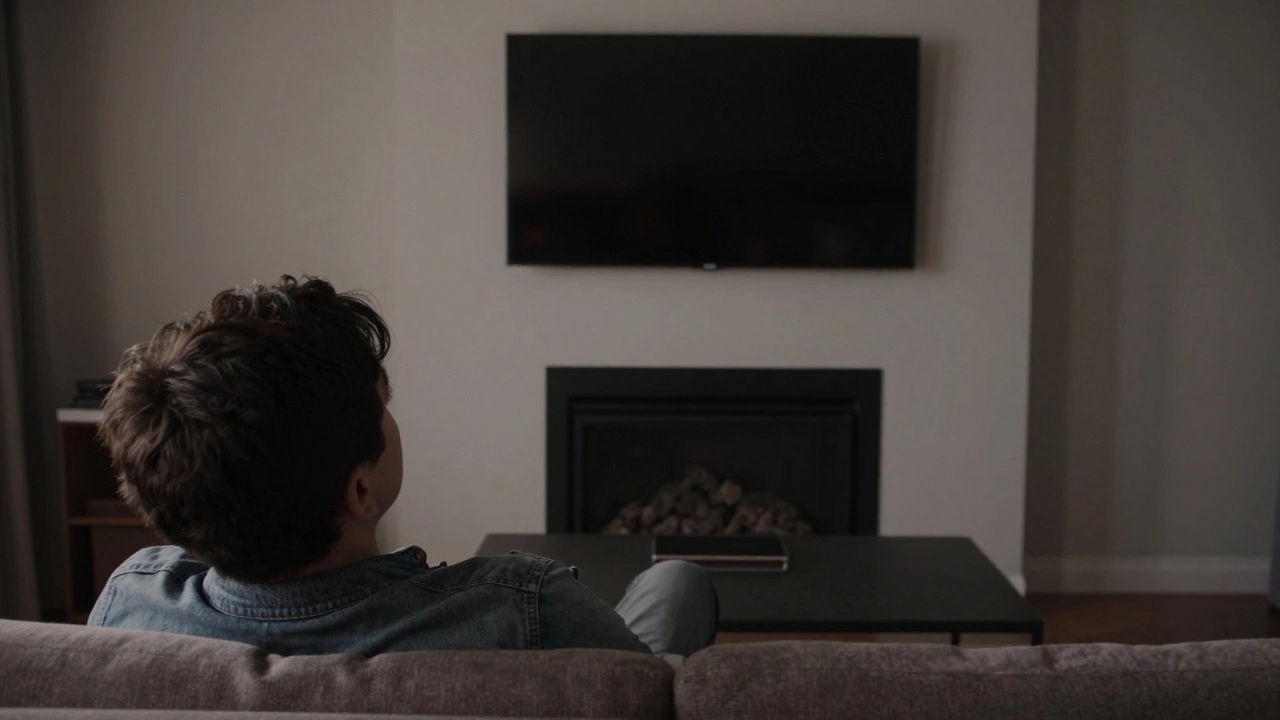
Not every living room is a perfect rectangle. Maybe your couch faces a corner. Maybe the TV is mounted above a fireplace. Or maybe your only clear wall is next to a window that glares at 3 p.m. These aren’t just design quirks-they’re viewing obstacles.If your TV is above a fireplace, you’re probably looking up. That’s fine for a short time, but after 20 minutes, your neck starts to ache. The ideal height is eye level when you’re seated. That usually means the center of the screen should be about 42 inches off the floor. If your TV is too high, lower the mount. If you can’t, tilt it down slightly. Don’t just live with it.
And what about lighting? If your couch is right in front of a big window, you’ll get glare on the screen during the day. Move the couch back a foot or two, or add blackout curtains. You don’t need a home theater to fix this. Just adjust your layout.
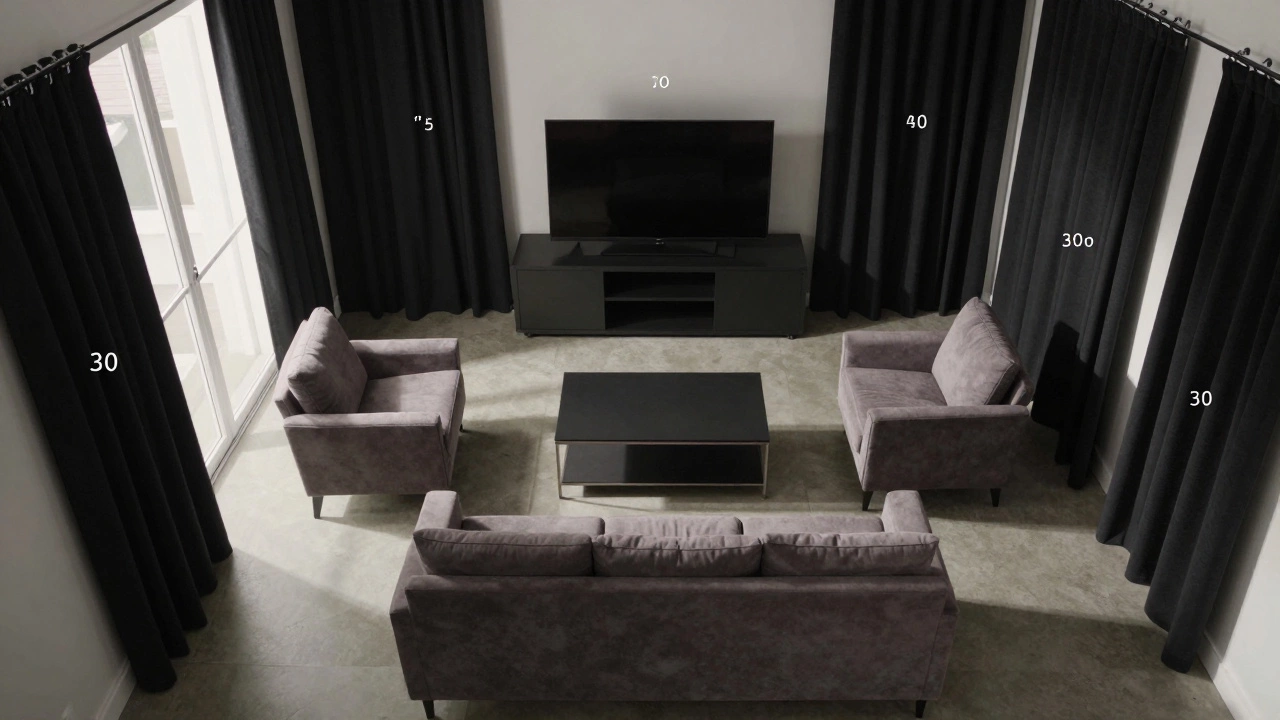
Test it before you commit
Don’t just measure and guess. Test it. Grab a tape measure, sit on your couch, and mark where your feet are. Now, use a piece of tape or a pillow to mark the spot where the TV should be. Watch a full episode of your favorite show from that spot. Do your eyes feel tired? Do you lean forward? Do you miss dialogue because you’re distracted by the coffee table?If the answer is yes, move the couch. Try 6 inches closer. Then 6 inches farther. Do it again. Most people find the sweet spot after two or three tries. It’s not about math-it’s about feel. Your body knows what’s right before your brain does.
What about bigger screens? 85 inches and up
If you’ve got a massive TV-85 inches or more-you’re not just watching TV. You’re watching a movie theater. The same 1.5 to 2.5 rule still applies, but you can push closer. For an 85-inch 4K TV, 7 to 9 feet is ideal. Some people even sit at 6 feet and feel immersed. That’s fine, as long as you’re not straining.But here’s the catch: big TVs need big space. If your living room is small, a huge screen can feel overwhelming. It’s not just about distance-it’s about proportion. If your couch is 10 feet from the wall and your TV is 85 inches, the room will feel like a cinema. If your couch is only 6 feet from the wall, that same TV will feel like it’s bursting out of the wall. Balance matters.
What if you have multiple seating areas?
Maybe you’ve got a sectional with a chaise on one side, or two armchairs facing the TV. Now you’ve got different viewing angles and distances. The goal isn’t to make everyone perfectly centered-it’s to make sure no one is too far or too far off-angle.For side seating, the rule is simple: don’t sit farther than 1.5 times the screen size. So for a 65-inch TV, no one should be more than 8 feet away from the center of the screen. And if you’re sitting at a 45-degree angle or more, the screen starts to look distorted. That’s when you need to reconsider the placement. A swivel mount can help, or you might need to reposition the couch entirely.
Common mistakes and how to fix them
- Mistake: Putting the TV too high on the wall. Fix: Lower it so the center is at eye level when seated.
- Mistake: Using a coffee table that’s too tall or too close. Fix: Keep it 14-18 inches from the couch and no higher than 18 inches off the floor.
- Mistake: Ignoring lighting. Fix: Avoid placing the TV opposite windows. Use blinds or matte screen filters.
- Mistake: Buying a huge TV for a tiny room. Fix: Match screen size to room size. A 55-inch TV is plenty for a 10x12-foot space.
One more thing: don’t forget about sound. If your couch is too far from the TV, the speakers might not fill the room well. That’s when you need a soundbar. A good soundbar placed under the TV can make a 70-inch screen feel like it’s speaking directly to you-even if you’re 10 feet back.
Final check: your viewing zone
Here’s a quick checklist to make sure your setup is right:- Your TV size matches your room (55-inch for 10-15 ft, 65-inch for 12-18 ft, 75-inch+ for 15-20 ft).
- The center of the screen is at eye level when you’re seated.
- Your coffee table doesn’t block the bottom of the screen.
- You can watch a full episode without neck or eye strain.
- No glare from windows or lights hits the screen.
- Everyone in the room can see the screen without turning their head too far.
If you checked all six, you’ve got it right. It’s not about following a rule-it’s about making the space work for you. Your couch, your TV, your coffee table-they’re not just furniture. They’re part of how you relax. Get the distance right, and you’ll forget you even thought about it.
Is it better to sit closer or farther from the TV?
It depends on your screen size and resolution. For a 4K TV, sitting closer (around 1.5 times the screen size) gives you a more immersive experience without seeing pixels. For older HD TVs, sit farther (2 to 2.5 times the screen size) to avoid eye strain. The goal is comfort, not proximity.
Can a coffee table be too close to the couch?
Yes. If it’s less than 14 inches from the couch, it’s hard to move your legs comfortably. If it’s too tall or too close to the TV, it can block your view. Aim for 14-18 inches from the couch and keep it under 18 inches tall. The table should sit below your line of sight when watching TV.
What’s the best height for a TV on the wall?
The center of the screen should be about 42 inches off the floor when you’re seated. This matches average eye level on a sofa. If your TV is mounted higher, tilt it down slightly. Never mount it so high that you’re constantly looking up-your neck will thank you.
Does room lighting affect TV distance?
Absolutely. Bright light reflecting off the screen forces you to squint, making you lean forward or move closer than you should. Avoid placing your TV opposite windows. Use blackout curtains or a matte screen filter. If you can’t change the light, increase the distance slightly to reduce glare impact.
Should I get a bigger TV if I sit farther away?
Yes, but only if you want to feel immersed. If you’re sitting 15 feet away from a 50-inch TV, it’ll look small. A 75-inch TV at that distance fills your field of view better. Match the screen size to your viewing distance: bigger room = bigger screen. Don’t just buy the biggest one-buy the right one.