Sofa Bed Sleep Comfort Calculator
Is Your Sofa Bed Safe for Daily Use?
Based on a 2023 Sleep Foundation study showing 68% of daily sofa bed users report back pain
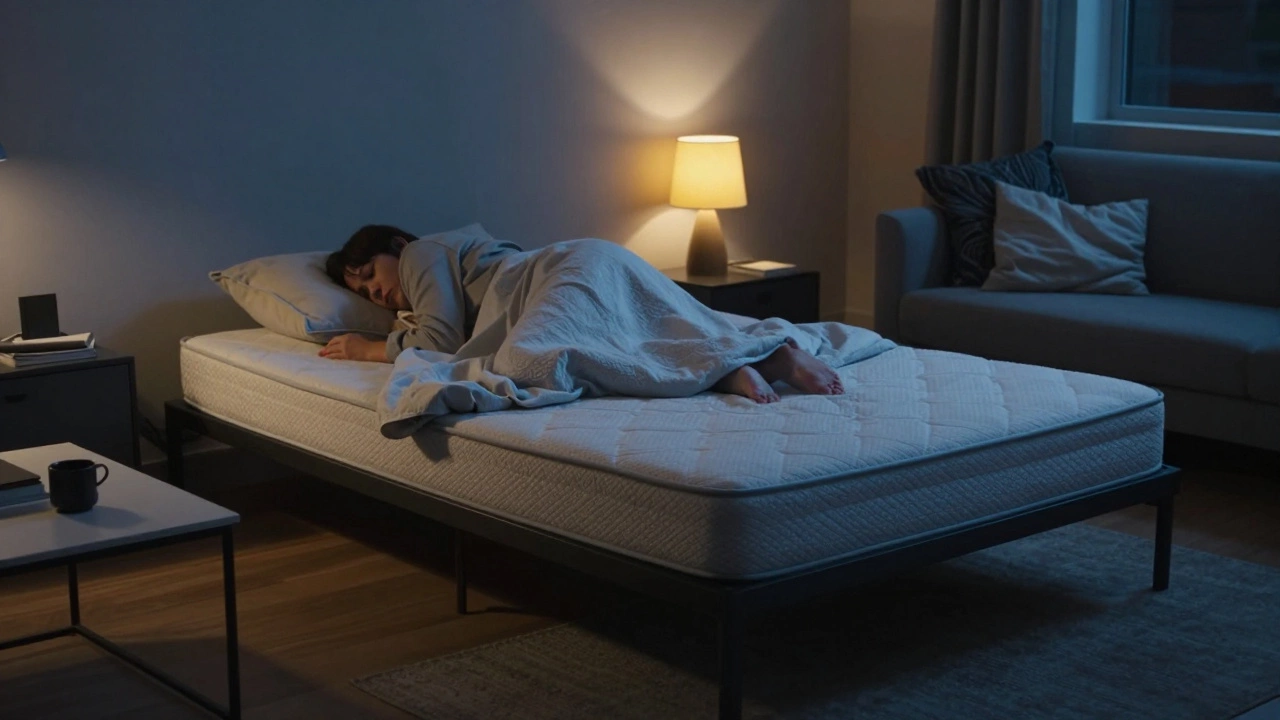
Ever looked at your sofa bed after a long day and thought, “Could I just sleep here every night?” You’re not alone. Many people use sofa beds as their main sleeping surface-whether it’s because of a small apartment, a tight budget, or just because it’s convenient. But is it actually okay to sleep on a sofa bed every day? Or are you setting yourself up for back pain, poor sleep, and a worn-out frame before long?
What Makes a Sofa Bed Different from a Regular Bed?
A sofa bed isn’t just a couch with a hidden mattress. It’s a hybrid design built for two conflicting purposes: sitting comfortably during the day and sleeping at night. That compromise shows up in the details.
Most sofa beds use a thin mattress-usually between 3 to 5 inches thick-compared to a standard bed mattress, which is typically 8 to 14 inches. That extra thickness in regular mattresses isn’t just for luxury. It’s there to support your spine, cushion pressure points, and absorb movement. A sofa bed mattress often sits on a metal or wooden frame that’s not meant to handle constant weight and pressure. Over time, that frame can sag, the springs can wear out, and the mattress can flatten unevenly.
Here’s what you’re really sleeping on: a layer of foam or coil springs sandwiched between a thin cushion and a rigid frame. That’s not the same as the layered support system in a quality innerspring, memory foam, or hybrid mattress designed for nightly use.
Can You Really Sleep on a Sofa Bed Every Night?
Technically? Yes. You’ve probably done it before-maybe during a guest visit, after a move, or when your room was being renovated. But “can you” doesn’t mean “should you.”
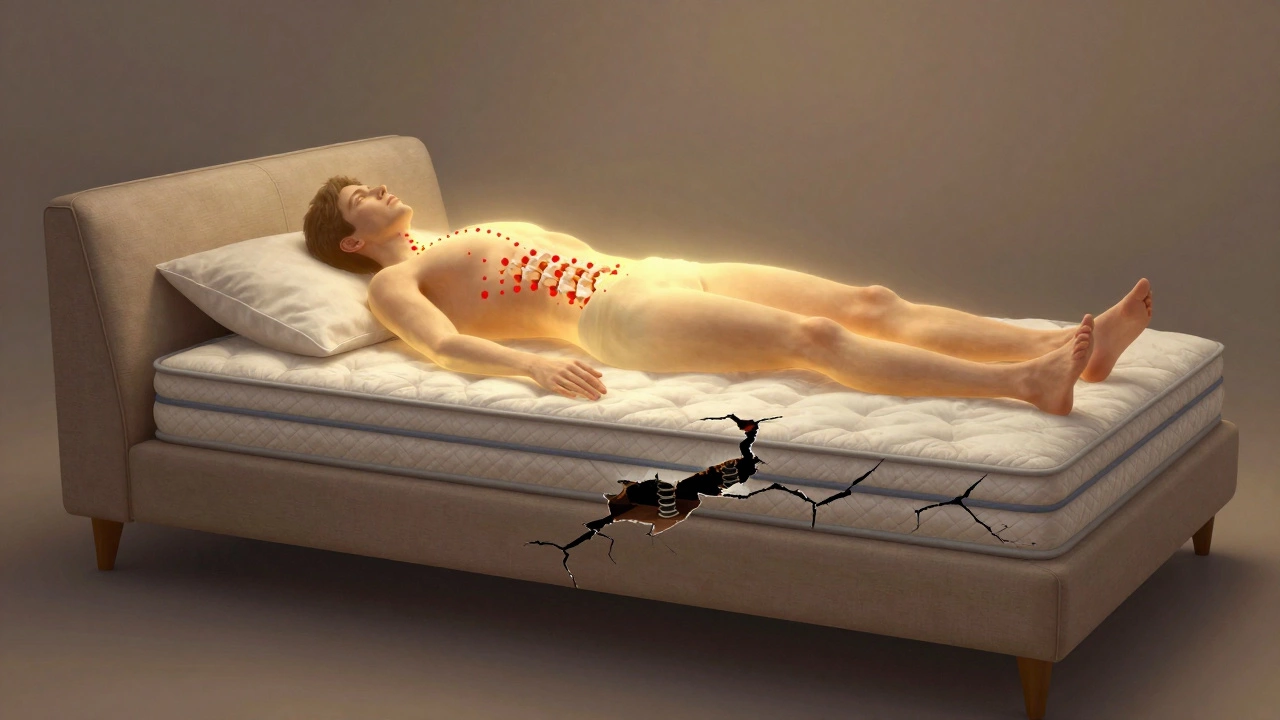
A 2023 sleep study by the Sleep Foundation tracked 1,200 people who used sofa beds as their primary sleeping surface for six months. The results? 68% reported increased back discomfort, 54% said they woke up more often during the night, and 41% felt less rested in the morning compared to when they used a regular bed.
Why? Three main reasons:
- Insufficient support: Thin mattresses don’t align your spine properly, especially if you sleep on your side or stomach.
- Uneven surface: Sofa bed frames often have bumps, seams, or metal bars that create pressure points.
- Constant folding/unfolding: Even if you leave it set up, the mattress compresses unevenly from daily sitting, leading to lumps and loss of cushioning.
It’s like trying to run a marathon in flip-flops. You can do it-but your body will pay the price.
Who Might Get Away With It?
Not everyone will suffer. Some people do fine sleeping on a sofa bed every night. Here’s who tends to manage:
- Lightweight sleepers (under 150 lbs): Less body weight means less pressure on the frame and mattress.
- Back sleepers: This position puts less strain on the spine than side or stomach sleeping.
- People with high-quality sofa beds: Some models now come with 6-inch memory foam mattresses and reinforced steel frames-closer to a real bed.
- Short-term users: If you’re only using it for a few months while waiting for a new bed, it’s manageable.
But if you’re over 180 lbs, sleep on your side, or have existing back or joint issues? A sofa bed is likely to make things worse.
What to Look for If You Must Use One Daily
If you’re stuck with a sofa bed as your main bed, not all models are created equal. Here’s what to check before committing:
- Mattress thickness: Aim for at least 6 inches. Anything less than 5 inches is a red flag.
- Mattress material: Memory foam or high-density polyfoam > innerspring > thin cotton padding.
- Frame material: Steel frames last longer than wood or plastic. Look for reinforced joints and a locking mechanism that holds the bed flat.
- Weight capacity: Check the manufacturer’s limit. If it’s under 300 lbs, it’s not built for daily use.
- Customer reviews: Look for mentions of “no sag after 1 year” or “still comfortable after daily use.”
Brands like Casper, Linenspa, and Zinus now offer sofa beds with 8-inch memory foam mattresses and steel frames. These aren’t perfect-but they’re the closest you’ll get to a real bed without buying one.
How to Make It Work Better (Even If You’re Stuck With It)
If you’re using a sofa bed every night, here are five simple fixes that actually help:
- Add a mattress topper: A 2- to 3-inch memory foam or latex topper adds cushioning and reduces pressure on your hips and shoulders. It’s cheap, easy to install, and can extend the life of your mattress.
- Flip and rotate weekly: Even if it doesn’t have two sides, rotating it helps distribute wear evenly.
- Use a bed frame or risers: Elevating the sofa bed by 4-6 inches improves airflow and makes getting in and out easier. It also takes pressure off the legs.
- Keep the area clean: Dust and debris get trapped in the crevices. Vacuum the mattress and frame every few weeks.
- Replace it every 2-3 years: Unlike regular mattresses, sofa beds wear out faster. Don’t wait until it’s lumpy and squeaky.
The Bigger Picture: Is It Worth It?
Sofa beds are great for guests, small spaces, or temporary setups. But using one as your main bed? It’s a trade-off.
You’re saving space and maybe money upfront-but you’re risking:
- Chronic back or neck pain
- Worse sleep quality
- Shorter lifespan of the furniture
- Higher long-term cost (replacing it sooner than a real bed)
If you’re thinking long-term, spending $500-$800 on a decent mattress and frame might seem steep. But compared to replacing a worn-out sofa bed every two years-and dealing with the sleep debt and discomfort-it’s a smarter investment.
Alternatives That Are Actually Better
Before you resign yourself to a lifetime on a sofa bed, consider these options:
- Daybed with trundle: Looks like a couch, sleeps like a bed. Often has a real mattress and sturdy frame.
- Storage bed with lift-up base: Doubles as storage and sleeping space. Great for tiny apartments.
- Loft bed with desk underneath: Perfect if you work from home and need to maximize floor space.
- Modular sectional with pull-out: Higher-end, but some now come with 8-inch mattresses and better support.
These alternatives cost more than a basic sofa bed-but they’re built to last and designed for nightly use.
Final Verdict
Is it okay to sleep on a sofa bed every day? The short answer: It’s possible, but not ideal.
If you’re young, light, healthy, and using a high-end model with a thick mattress, you might be fine for a few years. But if you’re heavier, have back issues, or just want to sleep well, a sofa bed isn’t the right long-term solution.
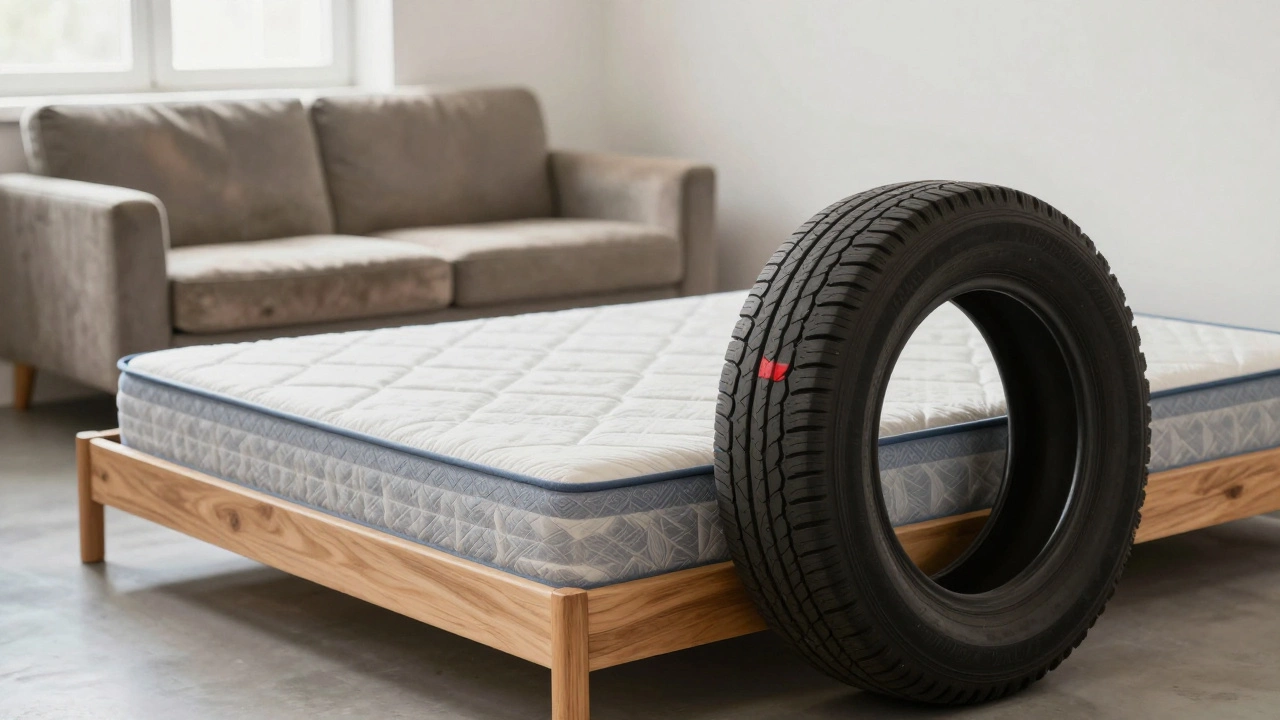
Think of it like this: you wouldn’t drive your car 100,000 miles on a spare tire. A sofa bed is the spare tire of sleeping surfaces. It works in a pinch-but not for daily commutes.
Invest in a real mattress. Your body will thank you.
Can a sofa bed cause back pain?
Yes, especially if the mattress is too thin or the frame doesn’t support your spine properly. Thin mattresses (under 5 inches) don’t align your hips and shoulders, leading to pressure on your lower back. A 2023 Sleep Foundation study found that 68% of daily sofa bed users reported increased back discomfort over six months.
How long does a sofa bed mattress last?
On average, a sofa bed mattress lasts 2 to 3 years with daily use. Regular mattresses last 7 to 10 years. The constant folding, sitting, and uneven weight distribution wear out the foam and springs faster. If your mattress is sagging, lumpy, or squeaky after two years, it’s time to replace it.
Is a memory foam sofa bed better for daily use?
Yes, if it’s at least 6 inches thick. Memory foam contours to your body, reduces pressure points, and holds its shape better than thin innerspring or cotton padding. Look for high-density foam (at least 3.5 lb/cu ft) and a steel frame. Brands like Casper and Zinus offer models designed for nightly use.
Can I add a mattress topper to my sofa bed?
Absolutely. A 2- to 3-inch memory foam or latex topper adds cushioning, improves spinal alignment, and reduces the feeling of metal bars underneath. It’s one of the cheapest and most effective upgrades you can make. Just make sure the topper fits the dimensions of your sofa bed.
Should I buy a sofa bed or a regular bed for a small apartment?
If you need guest space occasionally, a sofa bed makes sense. But if you’re sleeping there every night, a regular bed with under-bed storage or a loft bed will give you better sleep and last longer. Consider a daybed with a trundle-it looks like a couch but supports a full-size mattress. It’s a better long-term solution than a standard sofa bed.